Newport Mansions Wine & Food Festival runs September 25 to 27

Wine-food-glass-logo

From September 25 through 27, three of Newport’s most beautiful historic mansions will be filled with visitors and vendors celebrating the 10th Annual Newport Mansions Wine & Food Festival, presented by The Preservation Society of Newport County and FOOD & WINE. Hundreds of wines from around the world will be poured, and a variety of cuisine from regional restaurants and caterers will be served, making the festival one of the East Coast’s most sophisticated and anticipated events.

Tickets are still available at discounted advance prices for most of the weekend’s events.  Tickets may be purchased online at www.NewportMansionsWineAndFood.org or by calling (401) 847-1000.

Martha Stewart will return to the Newport Mansions Wine & Food Festival for her second year, headlining a brand new signature event with Jacques Pépin titled A Conversation with Martha Stewart and Jacques Pépin. Guests can enjoy a lively and engaging conversation with the lifestyle expert and the French chef while sipping Champagne Taittinger in the Marble House Gold Ballroom before heading out to the Grand Tasting. Stewart and Pépin will discuss what’s hot and what’s not in lifestyle and food trends, providing the audience with a rare opportunity to engage with them in a spectacular setting.

Chef Pépin will also join daughter Claudine Pépin for a cooking demonstration on the KitchenAid Culinary Demonstration Stage during Sunday’s Grand Tasting.

Regional favorites also participating in the weekend cooking demonstrations include New Yorkers Ben Pollinger, Executive Chef of Oceana restaurant in New York City; JJ Johnson, Chef de Cuisine of The Cecil in Harlem; and Allison and Matt Robicelli of wholesale bakery Robicelli’s in Brooklyn. Chocolate lovers will delight in a demonstration by Amy Guittard, author of the Guittard Chocolate Cookbook, and “Mr. Chocolate” himself, Jacques Torres. Additionally, local  chefs Matthew Petersen, Executive Chef of Newport Harbor Corp; Jamestown Fish Owner and Executive Chef Matthew MacCartney; and Frank Terranova, Johnson & Wales instructor and host of the NBC10 daily television segment “Cooking with Class” will be sharing their talent and tips on stage.

The Grand Tastings will also feature book signings by the guest chefs and other authors throughout the weekend.

The weekend kicks off with the Wine & Rosecliff gala on Friday night, featuring an outstanding selection of fine wines and food amid seaside Gilded Age splendor.

On Saturday night, the return of Newport After Dark will give guests an opportunity to extend the party late into the night while enjoying food and cocktails from some of the Festival sponsors at Forty 1˚ North on the Newport waterfront.

On Friday, visitors can attend seminars at the Hotel Viking to learn about wines from different regions of the world. Guests are encouraged to ask some of the industry’s most respected experts from vineyards such as Marchesi Antinori, Champagne Taittinger, and Bouchaine Vineyards about the tasting, pairing and buying of wine.

The Presenting Sponsor of the 2015 Newport Mansions Wine & Food Festival is FOOD & WINE Magazine.  Additional  sponsors  include Alex and Ani, National Trust Insurance Services, KitchenAid, United Airlines, Alaska Seafood, Lynx Grills, Atria Senior Living, Guittard Chocolate Company, Dock & Harbor  Maine, Harney & Sons Master Tea Blenders, Maple Leaf Farms, Urbani Truffles, Coca-Cola Bottling Company of Southeastern New England, Ruffino, Marchesi Antinori, WhistlePig Straight Rye Whiskey, Nobilo, Bouchaine Vineyards, Coravin, Champagne Taittinger, Sequoia Grove, Brinley Gold Shipwreck Rum, Hotel Viking Newport, Residence Inn Marriott, The Newport Harbor Hotel and Marina, Newport Hospitality, Inc., Arrow Prestige Limousine & Coach, and Meridian Printing. Production management services are provided by Plate + Decanter and Amadeo.

All proceeds from the Newport Mansions Wine & Food Festival benefit The Preservation Society of Newport County, a non-profit organization accredited by the American Alliance of Museums, and dedicated to preserving and interpreting the area’s historic architecture, landscapes, and decorative arts.  Its 11 historic properties—seven of them National Historic Landmarks—span more than 250 years of American architectural and social development.
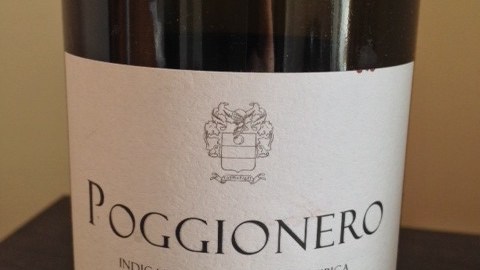
Toscana Resort Castelfalfi and a taste of Poggionero 2012

Poggionero 2012 was a good vintage for this authentic Tuscan wine, grown on one of the most beautiful estates I’ve ever had the pleasure to visit in Tuscany: Castelfalfi. The breakdown of grapes are 50 percent cabernet sauvignon, 40 percent merlot and 10 percent alicante. Twelve months in barrels resulted in this ruby-colored, depthful taste of Tuscany’s terroir translated into elegance and sophistication. Sipping on this wine brings back memories of my visit during a chilly spring Easter weekend, where I enjoyed dinner in La Rocca Castelfalfi, a castle that hosts a Michelin-star restaurant/chef.

On my way to Castelfalfi, the winding road was almost invisible due to the distant fog. The weather’s uncooperative nature led me to drift in imagining myself meandering along the pathways that tied the estate together like the wrapping of a luxurious gift. All I was able to view was a peek of exquisiteness in the surrounding view. And that was good enough for the moment. The scene of rolling vineyards and Tuscan farmhouses pressed against a sleepy blanket of misty air was almost too beautiful to bear, to the point where my eyes moistened in thoughts of reality; this scene was not digitally-enhanced. The following day, as the fog unwrapped to a glorious definition of resplendent landscape I witnessed from my Hotel Tabaccaia terrace, I began to understand the succinct and sensory title of being under the Tuscan sun.

Olive treesOlive and Cypress trees at Castelfalfi Resort in Tuscany.

From Florence, the drive to Resort Castelfalfi is approximately one-hour, and the conversation about the habits of wine drinkers in Italy versus the U.S. revealed just what I imagined — that drinking wine is part of a culture in Italy, while in the U.S. it is an indulgence triggered by the need for social lubricant.

In Italy, a child grows up drinking wine diluted with water, which educates the palate for tasting wine to its fullest potential by the time of adulthood. In fact, as part of a debut into adulthood, in Italy, participation in a wine harvest is a ritual experienced for youth “coming of age.” With this concept in mind, I cannot help but wonder if what I taste at Castelfalfi might only be tastier had I been drinking diluted wine as a young girl growing up in the U.S. Alas, I was not in the U.S., but in Tuscany, where I plan to return time and time again, if not for the wine, but for the olives and oil, as well as the incredible Italian dishes and friends I made along the way.

Three must-visits in Venice: Tea Time at The Metropole, Harry’s Bar & the Caffe Florian

From the moment we unpacked our suitcases upon check-in at the Metropole Venice, we had one mission in mind: get to Harry’s Bar for a Bellini. This was a recommendation that became our obsession. We hadn’t known exactly how special the experience would be, or how delicious a homemade Bellini could taste. The ritual of sitting at the bar, watching the homemade peach juice pour into the cocktail shaker while two bartenders dressed to the nines pour our expensive, but worthwhile Bellini, and then pose with us for a keepsake, was time well spent. This is a tourist-y act to do, and not for the Millennial Generation, but for the Boomer Generation, it’s right up our alley. (OK, so maybe I’m a Gen X’er.)

It was easy to run off to the various alleyways of Venice and then return to our spot on the waterfront at Hotel Metropole. Convenience in location is everything, and we were able to catch a water bus from the steps of our hotel, head to Lido for pizza and local red wine, hop a boat back to San Marco, run left from Hotel Metropole to the residential area of Venice to explore, sip a Bellini at Harry’s Bar to the right, and mid-day, head for a sip of Oriental tradition: tea time in the Oriental Bar at the Metropole Venice.

Tea Time Metropole

I arrived at the tea room for a ceremony in tasting amid soft music and candlelight. The scene was set and I was relaxed before my first sip. Two tea-time experts catered to my curiosity explaining to me that green tea is meant to brew for three-to-four minutes and is best served with fish, while white tea is steeped at 70 degrees for five-to-seven minutes. Black tea is steeped at 90 degrees for five minutes and is best served with caprino cheese and beef seasoned in a savory blend of Italian herbs. The Oriental Bar collaborates with the French company Dammann Frères from October to March in offering a tea ceremony of 30 most famous blends in the world. These blends include Olong, Ceylon O.P. Kumana , green Genmaicha tea, Nepal Himalaya Shangri-La, Darjeeling Superior, Assam Superior and Yunnan Celestial.

Next stop: Caffe Florian, a historic landmark of Venice.

DSC00042

We weren’t sure what to order: coffee or a cocktail? So we ordered coffee liqueur cocktails as a compromise. Three words: Worth. Every. Penny. The interior design alone is worth a visit. Fortunately, it’s location is a short walk from Metropole Venice and we were able to freshen up before and after our activities. One particular activity that was educational and special was a tour we signed up for through Walks of Italy for a Legendary Venice Tour. From the Doges Palace to St. Mark’s Basilica, it was thrilling to hear the background stories stepped in artwork, interior design extraordinaire, and spaces that one could only imagine filled with dukes and nobles of the past. You can’t get this type of experience unless you’re with an expert tour guide.

Aside from the tourist attractions, it was our off-the-beaten path experience of turning to the left of Hotel Metropole to walk through the residential area. This experience made the entirety of our visit to Venice well-rounded and worth a toast to accomplishing many activities, sips and tastes into a few short days.

What I learned at IWINETC 2015 in La Champagne, France

I only drink Champagne on two occasions, when I am in love and when I am not.

– Coco Chanel

I stand in the cellar at Champagne Collet in Aÿ, in the heart of the Champagne region, where one million bottles a year are produced. The historic cellars which were once a refuge during war are now home to some of Champagne’s finest caves, where millions of bottles age for our eventual palatable pleasure. As an attendee at the International Wine Tourism Conference 2015, held this year in La Champagne, France, I was honored to receive a hands-on education in Champagne making and tasting.

“The bottles are placed in a 45-degree angle, necks down in the pupitres,” our guide explains, and the riddler turns the bottles every one to three days over a period of several weeks. Referred to as “remuage,” the process of riddling was invented by Widow Clicquot of Veuve Clicquot fame. Today, most Champagne bottles are riddled mechanically, but the ridge-lined shape of this particular Collet bottle does not fit within the parameters of the machine and must be turned manually.

Champagne Collet's Esprit Couture Brut
Champagne Collet’s Esprit Couture Brut, 

A bottle of Esprit Couture was bestowed upon me, and I recently had the pleasure of sharing it with friends. This is a Champagne crafted entirely by hand from start to finish utilizing Collet’s finest crus in a blend of 40 percent Chardonnay (for elegance and finesse), 50 percent Pinot Noir (for depth and structure) and 10 percent Pinot Meunier (fruit flavor).

This particular Champagne is aged for a minimum of five years within Collet’s chalk cellars.

Upon sipping this amazing bubbly, there was no doubt it was just that… fine effervesces gave way to vanilla and floral aromas with a taste of minerality and citrus blended perfectly for the palate.

Perhaps it is in the crafting of a selection of grapes from twenty vineyards in La Champagne, but the delicate aromas and flavors, like melting roses on my palate, wins my praise once I sip Collet’s privee rosé dry Champagne. This is a blend of pinot noir and chardonnay grapes with a bit of pinot meunier for its fruitiness, aged four years in a century-old chalk cellar.

The next morning, my tour on the Champagne Trail continues with a half-mile-long stroll on Avenue de Champagne in Epernay, where I walk on top of 200 million bottles of bubbly. Or so I’m told.

Thoughts about taste and terroir dominate my mind as I reflect on my journey through the wine regions of France. Author and scholar Barbara Kirshenblatt-Gimblett once conducted research on sensory pleasures in food, citing the fact that “Wine is alive”— “It matures over the years and changes even in a few hours. It is an event. Even a single taste can be like an act in a play that is as long as the life of the vintage.” I would have to agree.

To view Collet’s video on Champagne’s tradition, click here.

Wines of Lanzarote

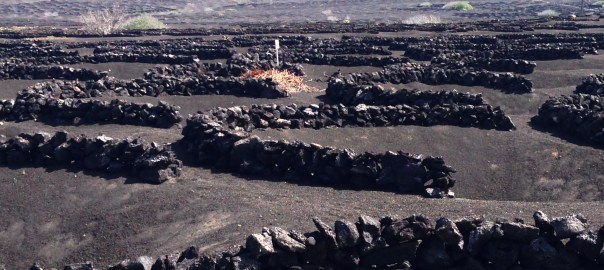
Lanzarote, a UNESCO designated biosphere reserve and one of the seven paradisiac Canary Islands off the coast of Spain, is ever spring-like. One might describe it as the Hawaii of Europe. But, does this weather create an interesting wine? A grapevine needs stress, and this is usually accommodated with cool nights and warm days. In Lanzarote, trade winds cause stress, and in an effort to protect the grapevines, the use of volcanic stones are arranged in a scallop shape as a barrier to the direction of the wind, as pictured above.

La Geria is where you’ll find vineyards that grow some fabulous grapes: Malvasía, Listán Blanca, Diego or Muscatel, the latter a late harvest. This winery creates some interesting DOC Lanzarote wines, including some tasty white wines that pair well with the fish and shellfish of the island. But you may want to try out a red wine — a red tinto once macerated with the branch of the grapevine — to go with some goat meat or black canary pork. This black Liston is not my favorite taste, so I’ll stick with the whites and dessert wine. But I did only visit one winery, and there are 18 in Lanzarote, 13 notable wineries.

I would have never known such beauty existed in a land that emerged so long ago (500 B.C.) if I had not been so tired of the cold raw winter in Paris. Lanzarote offers a sunny escape for Europeans who do not want to travel far. I stayed at the luxurious Arrecife Gran Hotel & Spa, a tall skyscraper next to the beach, and a resort that has nothing to do with the César Manrique design throughout the island that incorporates the lava stones and landscape within interior design, but it was central and convenient.

The coastline is one to absorb, and my sights were set on the peculiar sight of “Calima,” a blanket of fog-like dust of Africa that wades across the sea to filter what would be a perfect view of Morocco. The structures I view as I tour the island are of mountains dusted with lichens that provide food for the island birds. The flora of Lanzarote complements stretches of white, gold- and black-sand beaches from the north and south, all connecting to impressive views of rock formations knifing out from the waves. And then there’s Timanfaya, a national park in the Fire Mountains open for touring since 1972, covered with voluminous volcanic structures and a breathtaking scene where a trail of camels offer humpback rides for the ultimate view of a vista extraordinaire. You can also taste dishes cooked in the heat of the volcano.

Visit Lanzarote. Seriously, it is worth your time.

Walnuts, vin jaune and Comté cheese

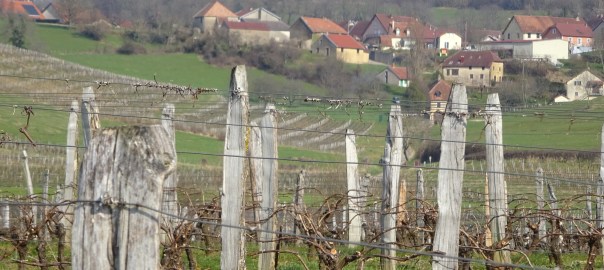
Not all wines are created equal. In 1990, Jean-Michel Petit tasted his first vin jaune in Pupillin, located in the Jura region of eastern France. By 1997, he had bottled his first barrel at Domaine de la Renardière, located on rue du Chardonnay. Today, he has 65 barrels filled with the grape of the region: savignin. To make vin jaune, these grapes are plucked late harvest to transform their structure in a unique process to the appellations of Arbois, ultimately producing a deep yellow wine aged anywhere from 5 to 50 years in old oak barrels.

Siting a vineyard on a slope offers better sun exposure, Jean-Michel explains, but as I stand on the highest point looking down at the bowl of vineyards in the Jura region of France, my thoughts connect the past to the present. In fact, this land was once underwater and has left behind fossils we easily find among a pile of rocks near the vineyards. Oyster shell imprints are indicative of the soil structure similar to that of the fine wines of Chablis and even some areas of Champagne, but with added limestone instead of chalk.

With both flat vineyards and sloping, Jean-Michel, owner of Domaine de la Renardière, has the best of both worlds: New World and Old World. He gets to grow grapes and make wine in the old tradition, but incorporate modernity at his will.

“If you know good basics, you can grow grapes,” he states during a tour of his property that has been in existence since the 13th century. He grows five grapes on his land: the original chardonnay and pinot noir, and the regional ploussard, trousseau, savignin, the latter to make the Jura’s unique savignin jaune.

In the last year, Jean Michel’s vineyard has been utilizing biodynamic methods, partly dictated by the lunar calendar. There are certain days when, he says, “it is best to stay indoors all day.” On these off-lunar days, work on the vineyard is on hold. At this time, the buds are about to break open.

Savignin jaune intrigued and distracted me from Jean Michel’s introduction to his white and red wines our group tasted straight from the used oak barrels. I wanted him to get to the point, which was the process of making yellow wine that can be grown only in this Jurassic soil. This wine is not aged in a cellar, but in an attic inside barrels never topped off. In a strange development that has not yet been scientifically explained (nor will it ever be to protect its AOC status), a veil of yeast forms on the wine, which protects it from oxidizing and adds intense aromas and flavors. Forty percent is lost in the barrels, and once in its unique-shaped bottle called a “clavelin,” vin jaune will keep for 6.5 years. Once the process is over, Jean-Michel sells his used barrels to a whisky producer; the whiskey will then acquire some vin jaune to its recipe.

Finally, we are offered a pour of vin jaune. Its aroma of sherry and walnuts surprises me, and sipping it surprises me even more so, as this wine tastes nothing like sherry. It offers intense acidity and tastes like a deeply concentrated 15-percent alcohol white wine best enjoyed following a meal with a plate of Comté cheese and some walnuts. It also pairs well with curry, dark chocolate and sausages, or so I am told. In fact, it was suggested to add a little in an omelet, and to make a recipe that includes chicken, mushrooms (morrels) and cream, with, of course – some vin jaune.

Bordeaux’s equivalent of Downton Abbey

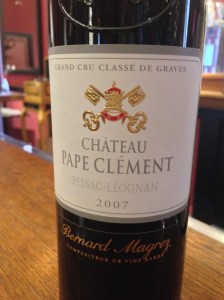
Chateau Pape Clement

This is the back of the castle, where my rental car pulled in and I emitted an uncontrollable, audible gasp. The grandeur of Château Pape Clément is where you’ll experience church meets wine and feel like you’ve gone to heaven.

Part of this chateau’s structure dates back to the 16th century, during the time of Pope Clement V. But the vineyard on the estate, gifted to Pope Clement V upon his appointment as Archbishop of Bordeaux, has been around since the 13th century. As the oldest wine estate in the Bordeaux region of France, Château Pape Clément’s vineyard has survived phylloxera and two forms of mildew, as well as the French Revolution, the latter ending the relationship between church and wine. Today, both the vineyard and château stand strong and thrive in the commune of Pessac. Since the 1980’s, the château and its vineyards have been owned by Bernard Magrez, better known for his Luxury Wine Tourism brand.

Chateau Pape Clement15chateau pape clement tasting room5Chateau Pape Clement6

Inside the château, a grand entrance leads to the breakfast room where you are served “Downton Abbey” style while seated at an oversized dining room table. In this same room, an armoire carved in what seems to be Old World scrolls and patterns opens to endless bottles of wines crafted by Magrez. One bottle sits on a table inside a suite where guests can relax for the evening in the utmost comforts. This bottle is a 2011 Cotes du Rousillon “Mon Seul Reve” that bears the double key logo insignia “Les cles de l’excellence” and Bernard Magrez’ name in script. His signature is on the label, so there is no doubt at all Magrez is the producer of this wine. And if two signatures aren’t enough, turn the bottle around and you’ll see another signature and a picture of the man responsible for Luxury Wine Tourism, and a quote:

“I have devoted my undivided attention to this high-quality wine which reflects I believe the experience I have gained with my “Grand Cru Classic wine – Chateau Pape Clement.”

In 2009, Magrez’ Grand vin, Château Pape Clément was awarded a perfect 100 from wine critic, Robert Parker, a gift from the heavens, perhaps.

For my bottle of Mon Seul Reve, carignan, syrah and grenache grapes were blended together to make an elegant offering I enjoyed a month following my visit. Perhaps I waited to savor the experience, since it was decadent and memorable. The chateau and winery, papal shrine and vineyard/grounds are worth a visit to the Bordeaux region of France. Check out the clay holding tank the winery is trying out these days (photo above, right).

If grandiose wine tasting and accommodations haven’t sold you by now, the neighboring tasting room is where you’ll get to sample the celebrated Grand Cru Classic, which was made with grapes grown in Pessac Leognan of 53 hectares. The grapes are cabernet sauvignon, merlot and a small percentage of petit verdot and an even smaller percentage (1%) of cabernet franc. This is a bottle worth every single sip. In fact, you can craft your own bottle of blends on certain days/times at the tasting bar.

For more information, visit luxurywinetourism.fr

Presenting The Countess of Grantham Collection

These New World bottlings take inspiration from Lady Cora Crawley, the thoroughly modern, American-born wife of British aristocrat Robert Crawley, Earl of Grantham. The collection’s red wine is a full-bodied Cabernet Sauvignon with scents of ripe red cherries that blend with spicy notes and soft vanilla on the palate. The white wine is a Chardonnay that offers the lovely aromas of tropical fruits and delicate oak giving way to citrus flavors on a soft, silky palate.

Combining the best old world winemaking practices with the newest winemaking techniques, the finished wines offer a distinct new taste option for Downton Abbey Wine fans seeking a uniquely modern twist.

Ask your local wine retailer for more information.

Educate your palate during 2015 Boston Wine Expo, Feb. 14 & 15

Founded in 1991 by the Boston Guild of Oenophilists, the Boston Wine Expo has grown into one of the most well-known and respected wine events in the country. Over $1,400,000 has been donated to local charities by the Guild including Tufts Medical Center’s Summer Camp Program for Children with Disabilities – the major beneficiary. Over 27 local charities have benefited from the Expo over the event’s history.  Other organizations that have received considerable funding include the New England Center for Homeless Veterans, Dana Farber Cancer Institute’s Pan Mass Challenge and the Massachusetts Coalition for the Homeless.

Presented by Boston Guild of Oenophilists, the 24th annual Boston Wine Expo at the Seaport Hotel & World Trade Center is offering educational seminars during its President’s Day weekend event. This year’s lineup again will include a variety of highly regarded educational programs from top winemakers and industry experts from around the world.

With nearly 40 topics ranging from food and wine pairings, “Sipping Smarts: Wine Basics,” and vertical tasting flights of the world’s most sought-after grapes, class is now – deliciously – in session:

SATURDAY, FEBRUARY 14th

  • 11:00am – 12:00pm: “Languedoc: The Frontier of French Wine” – $35.00
  • 11:00am – 12:00pm: “The New World of World-Class Wines: New York” – $35.00
  • 11:30am – 12:30pm: “Sipping Smarts: Wine Basics with Leslie Sbrocco” – $35.00
  • 12:00pm – 1:00pm: “The Secret Life of Pinot Noir” – $45.00
  • 12:00pm- 1:00pm: “Opus One Winemaker Michael Silacci: Beyond the Icon – Looking Backward and Looking Forward: A Vertical Tasting of the 1988, 1996, 2001 and 2010 Vintages” – $95.00
  • 12:30pm – 1:30pm: “Iconic Wines of Spain with Patrick Mata, Winemaker and Wine Importer Extraordinaire” – $40.00
  • 12:30pm – 1:30pm: “Central Otago: The Burgundy of the Southern Hemisphere – $30.00
  • 12:30pm – 1:30pm: “Tenuta Santa Maria alla Pieve, the Bertani Family’s Veronese Estate Winery” – $45.00
  • 1:30pm – 2:30pm: “The Biodynamic Approach to Winemaking with Rudy Marchesi of Montinore” – $30.00
  • 2:00pm – 3:00pm: “Sake…Is it just for Japanese Cuisine?” – $35.00
  • 2:30pm – 3:30pm: “Decadent and Delicious: Sweet Wines of the World” with Professor Ed Korry, Department Chairman at Johnson & Wales University and President of the Society of Wine Educators – $35.00
  • 2:30pm – 3:30pm: “Exploring the Treasures of Argiano’s Tuscan Estate” – $40.00
  • 3:00pm – 4:30pm: “Complete Ten Year Vertical of St. Estephe’s Chateau Meyney” with its rising star winemaker Anne Le Naour and Jean-Christophe Calvet of Aquitaine Wine Company – $35.00
  • 3:30pm – 4:30pm: “Argentina’s New Terroirs-: A Journey of Discovery” – $30.00
  • 3:30pm – 4:30pm: “Wine Words: Learn the Language of Wine” – $30.00
  • 4:00pm – 5:00pm: “Scotch versus Irish Whisk(e)y” – $35.00
  • 4:00pm – 5:00pm: “Craft Beer Cellar Beer Smart Academy” – $30.00
  • 4:00pm – 5:00pm: “The Cool Climate, World Class Wines of the Finger Lakes” – $30.00
  • 4:00pm – 5:00pm: “Wine Spectator Presents… Taste Like a Pro, 201” – $35.00

SUNDAY, FEBRUARY 15th:

  • 11:00am – 12:00pm: “Taste some of Italy’s Best Olive Oils” with Johnny Madge – $25.00
  • 11:00am – 12:00pm: “The Wines of Uruguay” – $25.00
  • 11:30am – 12:30pm: “Sipping Smarts: Wine Basics” with Leslie Sbrocco – $35.00
  • 11:30am – 12:30pm: “Opus One Winemaker Michael Silacci: Beyond the Icon – Looking Backward and Looking Forward: A Vertical Tasting of the 1988, 1996, 2001 and 2010 Vintages” – $95.00
  • 12:00pm – 1:00pm: “Cheese and Wine Matching Seminar” with Brad and Brian Wasik of the Wellesley Cheese Shop – $40.00
  • 12:00pm – 1:00pm: “New England Cider: The Lost Apple Project’s Ciders with a Supporting Cast of Artisan Cheese and Salumi” – $30.00
  • 12:00pm – 1:00pm: “Rock ‘Em, Sock ‘Em…a Shootout Between the wines of Chile and Argentina” – $35.00
  • 12:30pm – 1:30pm: “The Amazing Story of Barolo with Ciro Pirone, Director of Italian Wines, Horizon Beverage” – $45.00
  • 12:30pm – 1:30pm: “Domaines Albert Bichot Verticals: Grand Cru Clos Vougeot and Meursault les Charmes” – $45.00
  • 2:00pm – 3:00pm: “Frog’s Leap Presents -The Art of Winegrowing – Organic, Biodynamic and Dry Farming: A Presentation on the Implications on Wine Quality with a Cabernet Sauvignon Vertical” lead by John Williams of Frog’s Leap Winery, Napa – $45.00
  • 2:00pm – 3:00pm: “The Republic of Georgia: Wines from Ancient Vines” – $25.00
  • 2:00pm – 3:00pm: “Stefano Girelli Presents the Wines of Santra Tresa, Sicily” – $40.00
  • 2:30pm – 3:30pm: “Sake and Sushi” with Hiromi Iuchi of Kuramoto Sake and Sushi from Cafe Sushi, Cambridge – $40.00
  • 3:00pm – 4:00pm: “The Best of Chianti Classico Just Got Better! A Discussion and Tasting of the New Gran Selezione Classification” with Winemaker Leonardo Bellaccini as well as a Vertical Tasting of his Superb Chianti Classico Riserva ‘Poggio Rosso’ – $35.00
  • 3:30pm – 4:30pm: “Wine and Chocolate: the Best Wine Matches for superb Valrhona Chocolates” – $35.00
  • 3:30pm – 4:30pm: “Wine Spectator Presents…. Iconic Wines of the Pacific Northwest: a Taste of Oregon and Washington” – $35.00
  • 3:30pm – 4:30pm: “The Modern Wines of Ancient Greece with Ted Diamantis, Founder of Diamond Wine Importers” – $30.00
  • 4:00pm – 5:00pm: “Gin versus Vodka: the Title Fight” – $30.00
  • 4:00pm- 5:00pm: “Cognac Seminar” with International Cognac Expert and Author, Becky Sue Epstein – $45.00

The Boston Wine Expo will take place at The Seaport Hotel & World Trade Center on February 14 and 15, from 1-5 p.m. This event is reserved for ages 21+. Tickets are on sale and available by visiting: www.wine-expos.com/buytickets. Weekend tickets and discount group tickets are also available.

The Seaport Hotel & World Trade Center is located at 200 Seaport Boulevard in Boston, MA. For directions and more information, please visit: www.seaportboston.com.

Boston Wine Expo sponsors include Infiniti, Citizens Bank, Alex and Ani, xfinity, Wines of Argentina, Hope Family Wines, National Wine Agency – Georgia Ministry of Agriculture, Cooper Smith, Maine Tourism, Humboldt Imports, Celebrity Cruises, Maple Leaf Farms, Lodi Wine Grape Commission, Taste New York, Legends from Europe, Italian Trade Commission and Massachusetts Beverage Business.

For more information, please visit:www.wine-expos.com.

One day, two cities: Dijon and Beaune of Burgundy

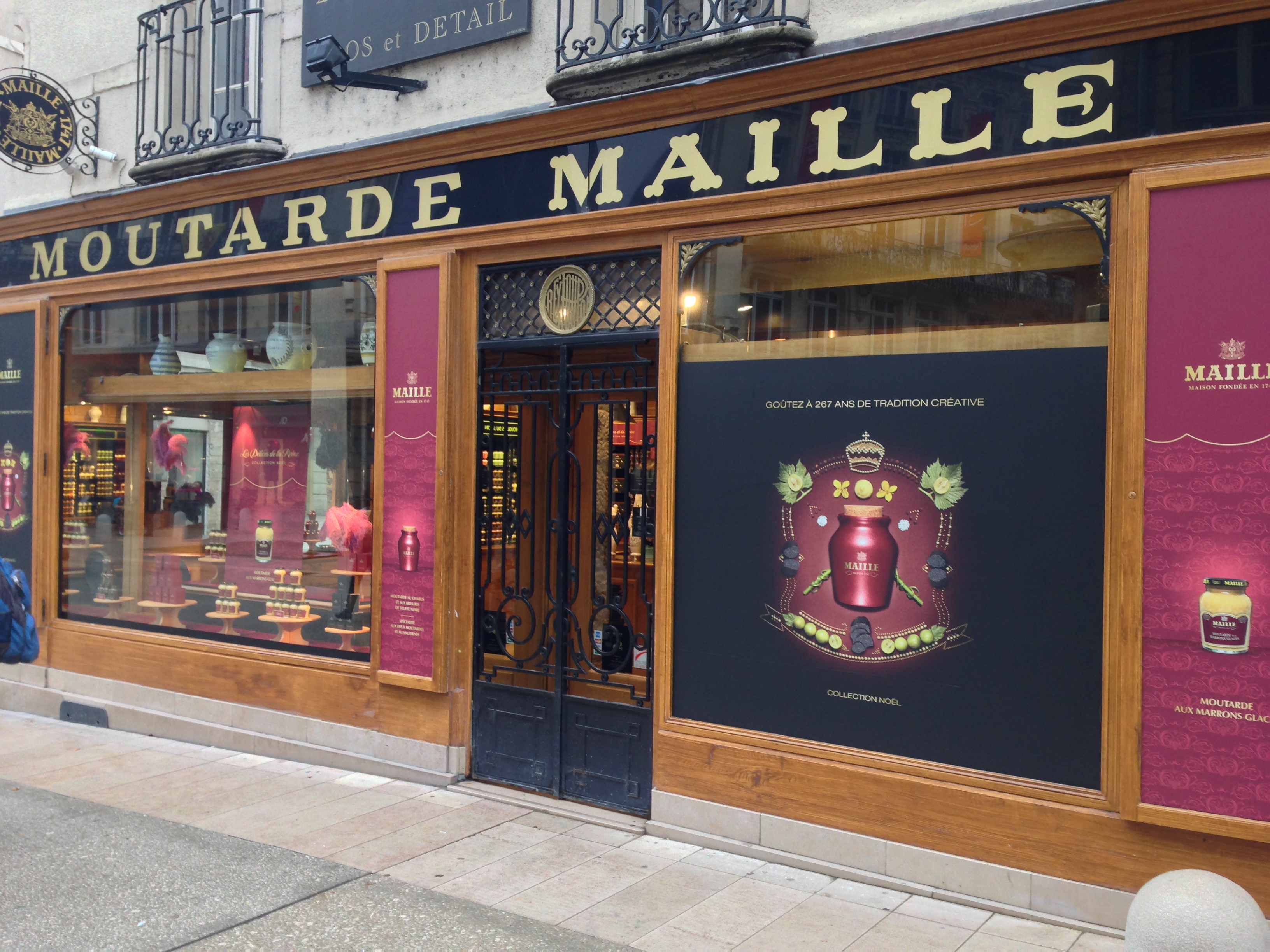
Hold the mustard… not! You’ll want to taste plenty of varieties in Dijon, where the TGV arrived early one morning to drop me off to a place where some of the world’s best mustard is produced and sold. In Dijon, mustard is everywhere and in all colors and flavors. It is here where I purchase a jar of mustard blended with Modena balsamic vinegar to bring home for a later indulgence. Once tasted, it proved worthy of another train ride to get more of this specialty to the Burgundy region of France.

Famous for its Dijon mustard, which originated in 1856, we can give thanks to Jean Naigeon, who substituted the green acidic juice of unripe grapes for vinegar, introducing the tasty and traditional recipe.

Aside from mustard, Dijon offers a city of history, and I partake in a brief walking tour offered by the Dijon Tourism Office to shed some light on the small area’s historical background. From Notre Dame to the Romanesque Dijon Cathedral to the Rue des Forges and Maison Milliere, I stroll along the cobblestone streets in awe of this quaint city in Eastern France.

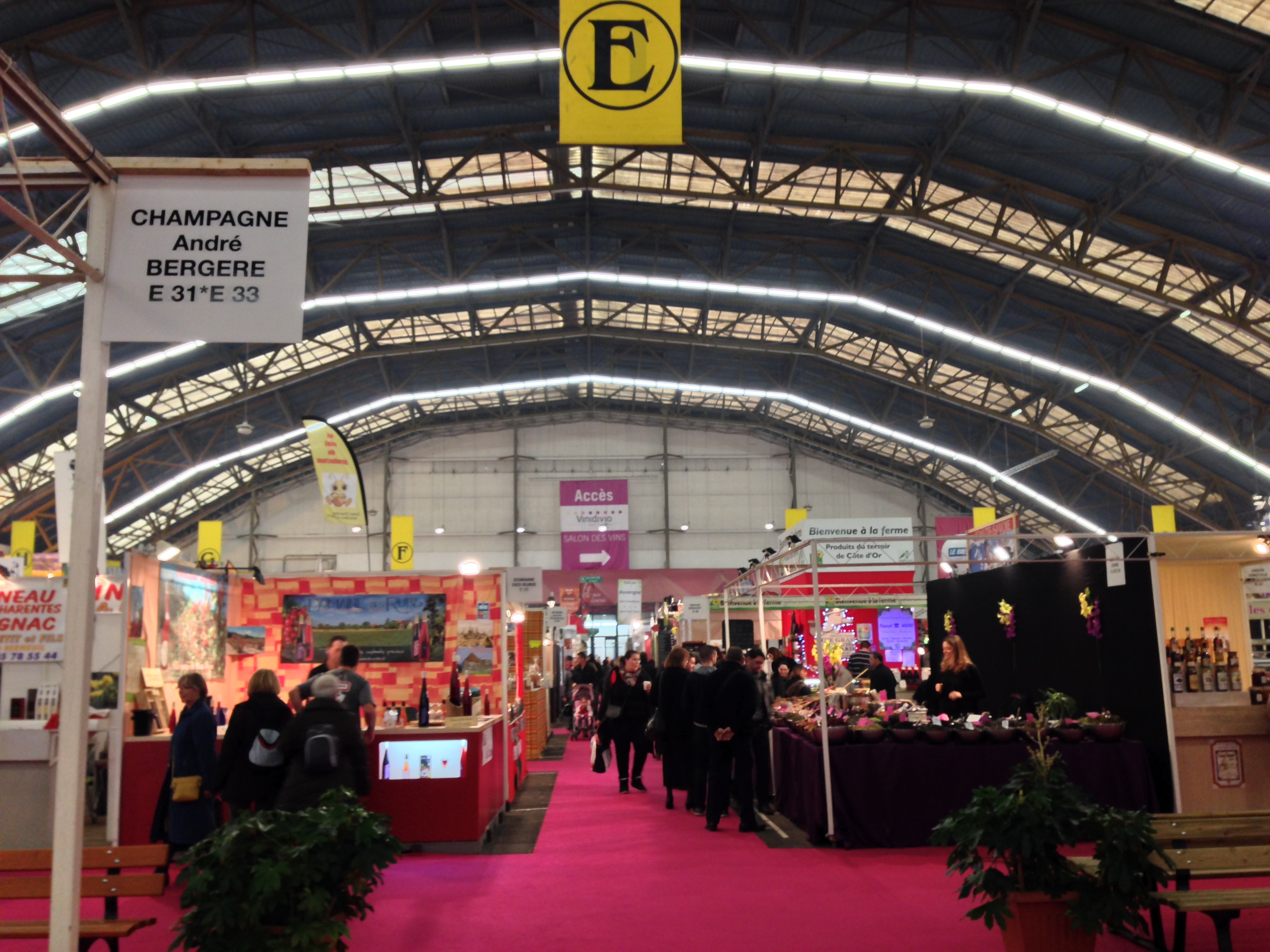
What brought me to Dijon, however, was not the mustard, or the “Kir” Dijon is known for – also known as crème de cassis, but the annual International and Gastronomic Fair, where over 500 exhibitors and 200,000 visitors flock for a taste of the region’s specialties. So, I hopped on a tram to arrive at the amazing Foire Gastronomique.

A paradise for foodies inside the Foire Gastronomique Dijon. Photo: Charlene Peters

Champagne is poured for a price, so I decide to sip an A. Bergere Champagne and sample Comte cheeses and more culinary delights, including escargot marinated in butter and seasoned with garlic and parsley. An order of pomme frites paired well with the Champagne as I strolled along the aisles holding the French specialty served in a paper cone.

A quick tram ride to the train station later, I’m headed to Beaune.

The Hospices of Beaune, established in 1443 by chancellor to the Duke of Burgundy – Nicolas Rolin and his wife, Guigone de Salins.

Google Mapping my way to the historic monument, the Hospices, I learn this is where some of the priciest wines are sold via a well-known wine auction. Although I didn’t have the opportunity to taste these wines, I did get a taste of the infirmary where, coincidentally, a woman in our small group fell ill. As I strolled through the “palace for the poor,” established in 1443 by chancellor to the Duke of Burgundy – Nicolas Rolin and his wife, Guigone de Salins – and listened on the audio-guide, I couldn’t help but wonder how the nuns would have taken care of my friend. I could almost see her lying in one of the many rows of beds. Fortunately, the pharmacies of France proved knowledgeable and within an hour of taking a recommended dose of a magic pill, the cheese-overindulgence side effects were a mere memory.

Off to the next stop, I ponder over the fact that the United States spends the most dollars on Burgundy wines of France, with the U.K. holding second place. In 2011 alone, 199 million bottles were sold, with the majority being white wine — mostly Chardonnay.

So, why are Burgundian red wines so special? Apparently, these wines are what they are due to their terroir, and some of the most expensive wines in the world come from this region of France. If you like pinot noir, these wines will send you swooning. They differ from American pinot noir grapes in that the Burgundian grapes are more fruit-forward, but they all pair well with savory, less spicy dishes.

To learn more, I stopped at Vins des Tonneliers, a distributer in Beaune that offers more than 500 Burgundy appellations selected carefully and personally from 52 family-run domains located in the Côte de Nuits and Côte de Beaune vineyards, the latter most famous for its white grand cru. With a few friends in tow, we tasted some local amuses-bouches and several rare wines made in small quantities from this distributor’s chilly wine cellar named La Vinif.

One Thursday each month, La Vinif offers “Thursday Aperitifs,” focusing on different themes and entertainment (visit Facebook page La Vinif – for members only). Customized service is what the Vins des Tonneliers offers, so for corporate events and parties, you can make an appointment for a full tasting, and this means with appetizers, to select the bottles of choice. Vins des Tonneliers will also help you with wine menus, corporate gifts, training, customer events, distribution and team-building seminars. The benefits of being a member of this organization include phone advice to those seeking wine pairing or wine-opening decisions on aging bottles, personalized notifications, occasional discounts, and access to private sales (membership fee is 150 euros/year). I walked out learning that dependent upon weather conditions, a white wine can be stored for 5 to 7 years, and a red for 8 to 10 years.

From Vins des Tonneliers, a 2008 Savigny-les-Beaune first grand cru “Aux Gravains” rouge.
From Vins des Tonneliers, a 2008 Savigny-les-Beaune first grand cru “Aux Gravains” rouge. Photo: Charlene Peters

I tasted an elegant chardonnay without a label, produced by a viticulturist, and a Pernand-Vergelesses ($25) that offered a clean, fresh minerality pairing nicely with cheese, fish, white meat – as an aperitif, and a puligne made from a wine merchant. As for the reds, a Pierre Bouchard 2011 Cote de Nuits-Villages ($17) offered licorice aroma and a spicy, young, delicious taste or raspberries and more red fruits, and a 2009 Domaine J.M. Boillet that isn’t titled as a grand cru – but it should be. This particular wine can be stored until 2024.  I also walked out with a bottle of 2008 Savigny-les-Beaune first grand cru “Aux Gravains” rouge that proved black current-forward when I tasted it, and opened it almost two months later for a special dinner of oysters, escargot and various French cheeses; it was a medium-bodied, flavorful pinot noir.

By 10 p.m. same day, I was back in Paris, satiated with wine tastings that paired well with adventure, and I now had a flavor of Dijon and Beaune, a destination I’d head back to for an overnight visit to sip and explore the various wine shops, bars and wineries in the walk-able circle. I also developed a strong thirst to return to Burgundy for a visit to the elusive Romanee-Conti, where one of the most expensive wine labels in the world is produced.

For more information, visit www.Visitdijon.com and www.beaune-tourisme.fr