Category Archives: Wine Destinations

Walnuts, vin jaune and Comté cheese

Not all wines are created equal. In 1990, Jean-Michel Petit tasted his first vin jaune in Pupillin, located in the Jura region of eastern France. By 1997, he had bottled his first barrel at Domaine de la Renardière, located on rue du Chardonnay. Today, he has 65 barrels filled with the grape of the region: savignin. To make vin jaune, these grapes are plucked late harvest to transform their structure in a unique process to the appellations of Arbois, ultimately producing a deep yellow wine aged anywhere from 5 to 50 years in old oak barrels.

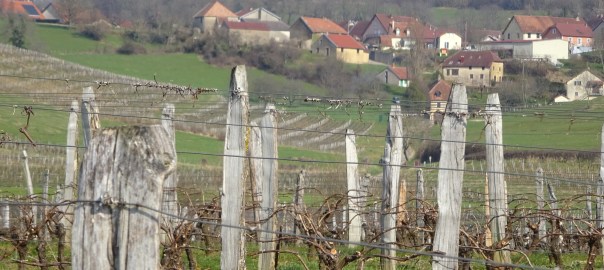
Siting a vineyard on a slope offers better sun exposure, Jean-Michel explains, but as I stand on the highest point looking down at the bowl of vineyards in the Jura region of France, my thoughts connect the past to the present. In fact, this land was once underwater and has left behind fossils we easily find among a pile of rocks near the vineyards. Oyster shell imprints are indicative of the soil structure similar to that of the fine wines of Chablis and even some areas of Champagne, but with added limestone instead of chalk.

With both flat vineyards and sloping, Jean-Michel, owner of Domaine de la Renardière, has the best of both worlds: New World and Old World. He gets to grow grapes and make wine in the old tradition, but incorporate modernity at his will.

“If you know good basics, you can grow grapes,” he states during a tour of his property that has been in existence since the 13th century. He grows five grapes on his land: the original chardonnay and pinot noir, and the regional ploussard, trousseau, savignin, the latter to make the Jura’s unique savignin jaune.

In the last year, Jean Michel’s vineyard has been utilizing biodynamic methods, partly dictated by the lunar calendar. There are certain days when, he says, “it is best to stay indoors all day.” On these off-lunar days, work on the vineyard is on hold. At this time, the buds are about to break open.

Savignin jaune intrigued and distracted me from Jean Michel’s introduction to his white and red wines our group tasted straight from the used oak barrels. I wanted him to get to the point, which was the process of making yellow wine that can be grown only in this Jurassic soil. This wine is not aged in a cellar, but in an attic inside barrels never topped off. In a strange development that has not yet been scientifically explained (nor will it ever be to protect its AOC status), a veil of yeast forms on the wine, which protects it from oxidizing and adds intense aromas and flavors. Forty percent is lost in the barrels, and once in its unique-shaped bottle called a “clavelin,” vin jaune will keep for 6.5 years. Once the process is over, Jean-Michel sells his used barrels to a whisky producer; the whiskey will then acquire some vin jaune to its recipe.

Finally, we are offered a pour of vin jaune. Its aroma of sherry and walnuts surprises me, and sipping it surprises me even more so, as this wine tastes nothing like sherry. It offers intense acidity and tastes like a deeply concentrated 15-percent alcohol white wine best enjoyed following a meal with a plate of Comté cheese and some walnuts. It also pairs well with curry, dark chocolate and sausages, or so I am told. In fact, it was suggested to add a little in an omelet, and to make a recipe that includes chicken, mushrooms (morrels) and cream, with, of course – some vin jaune.

Bordeaux’s equivalent of Downton Abbey

Chateau Pape Clement

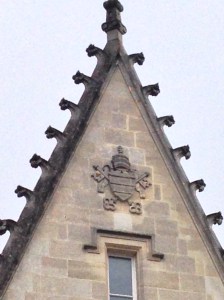
This is the back of the castle, where my rental car pulled in and I emitted an uncontrollable, audible gasp. The grandeur of Château Pape Clément is where you’ll experience church meets wine and feel like you’ve gone to heaven.

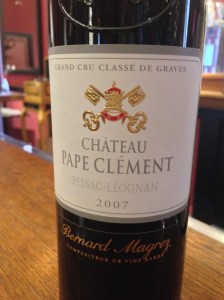
Part of this chateau’s structure dates back to the 16th century, during the time of Pope Clement V. But the vineyard on the estate, gifted to Pope Clement V upon his appointment as Archbishop of Bordeaux, has been around since the 13th century. As the oldest wine estate in the Bordeaux region of France, Château Pape Clément’s vineyard has survived phylloxera and two forms of mildew, as well as the French Revolution, the latter ending the relationship between church and wine. Today, both the vineyard and château stand strong and thrive in the commune of Pessac. Since the 1980’s, the château and its vineyards have been owned by Bernard Magrez, better known for his Luxury Wine Tourism brand.

Chateau Pape Clement15chateau pape clement tasting room5Chateau Pape Clement6

Inside the château, a grand entrance leads to the breakfast room where you are served “Downton Abbey” style while seated at an oversized dining room table. In this same room, an armoire carved in what seems to be Old World scrolls and patterns opens to endless bottles of wines crafted by Magrez. One bottle sits on a table inside a suite where guests can relax for the evening in the utmost comforts. This bottle is a 2011 Cotes du Rousillon “Mon Seul Reve” that bears the double key logo insignia “Les cles de l’excellence” and Bernard Magrez’ name in script. His signature is on the label, so there is no doubt at all Magrez is the producer of this wine. And if two signatures aren’t enough, turn the bottle around and you’ll see another signature and a picture of the man responsible for Luxury Wine Tourism, and a quote:

“I have devoted my undivided attention to this high-quality wine which reflects I believe the experience I have gained with my “Grand Cru Classic wine – Chateau Pape Clement.”

In 2009, Magrez’ Grand vin, Château Pape Clément was awarded a perfect 100 from wine critic, Robert Parker, a gift from the heavens, perhaps.

For my bottle of Mon Seul Reve, carignan, syrah and grenache grapes were blended together to make an elegant offering I enjoyed a month following my visit. Perhaps I waited to savor the experience, since it was decadent and memorable. The chateau and winery, papal shrine and vineyard/grounds are worth a visit to the Bordeaux region of France. Check out the clay holding tank the winery is trying out these days (photo above, right).

If grandiose wine tasting and accommodations haven’t sold you by now, the neighboring tasting room is where you’ll get to sample the celebrated Grand Cru Classic, which was made with grapes grown in Pessac Leognan of 53 hectares. The grapes are cabernet sauvignon, merlot and a small percentage of petit verdot and an even smaller percentage (1%) of cabernet franc. This is a bottle worth every single sip. In fact, you can craft your own bottle of blends on certain days/times at the tasting bar.

For more information, visit luxurywinetourism.fr

One day, two cities: Dijon and Beaune of Burgundy

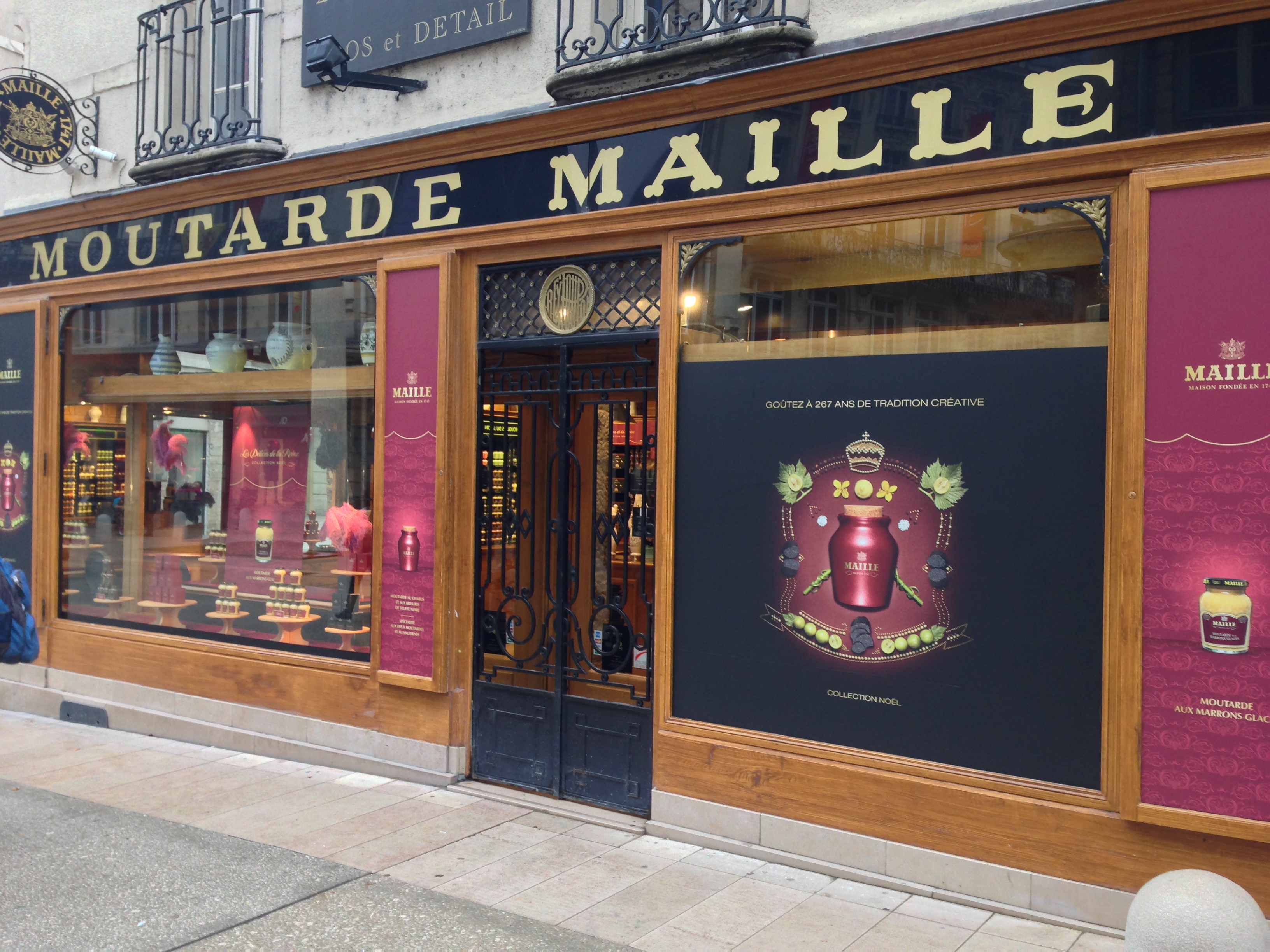
Hold the mustard… not! You’ll want to taste plenty of varieties in Dijon, where the TGV arrived early one morning to drop me off to a place where some of the world’s best mustard is produced and sold. In Dijon, mustard is everywhere and in all colors and flavors. It is here where I purchase a jar of mustard blended with Modena balsamic vinegar to bring home for a later indulgence. Once tasted, it proved worthy of another train ride to get more of this specialty to the Burgundy region of France.

Famous for its Dijon mustard, which originated in 1856, we can give thanks to Jean Naigeon, who substituted the green acidic juice of unripe grapes for vinegar, introducing the tasty and traditional recipe.

Aside from mustard, Dijon offers a city of history, and I partake in a brief walking tour offered by the Dijon Tourism Office to shed some light on the small area’s historical background. From Notre Dame to the Romanesque Dijon Cathedral to the Rue des Forges and Maison Milliere, I stroll along the cobblestone streets in awe of this quaint city in Eastern France.

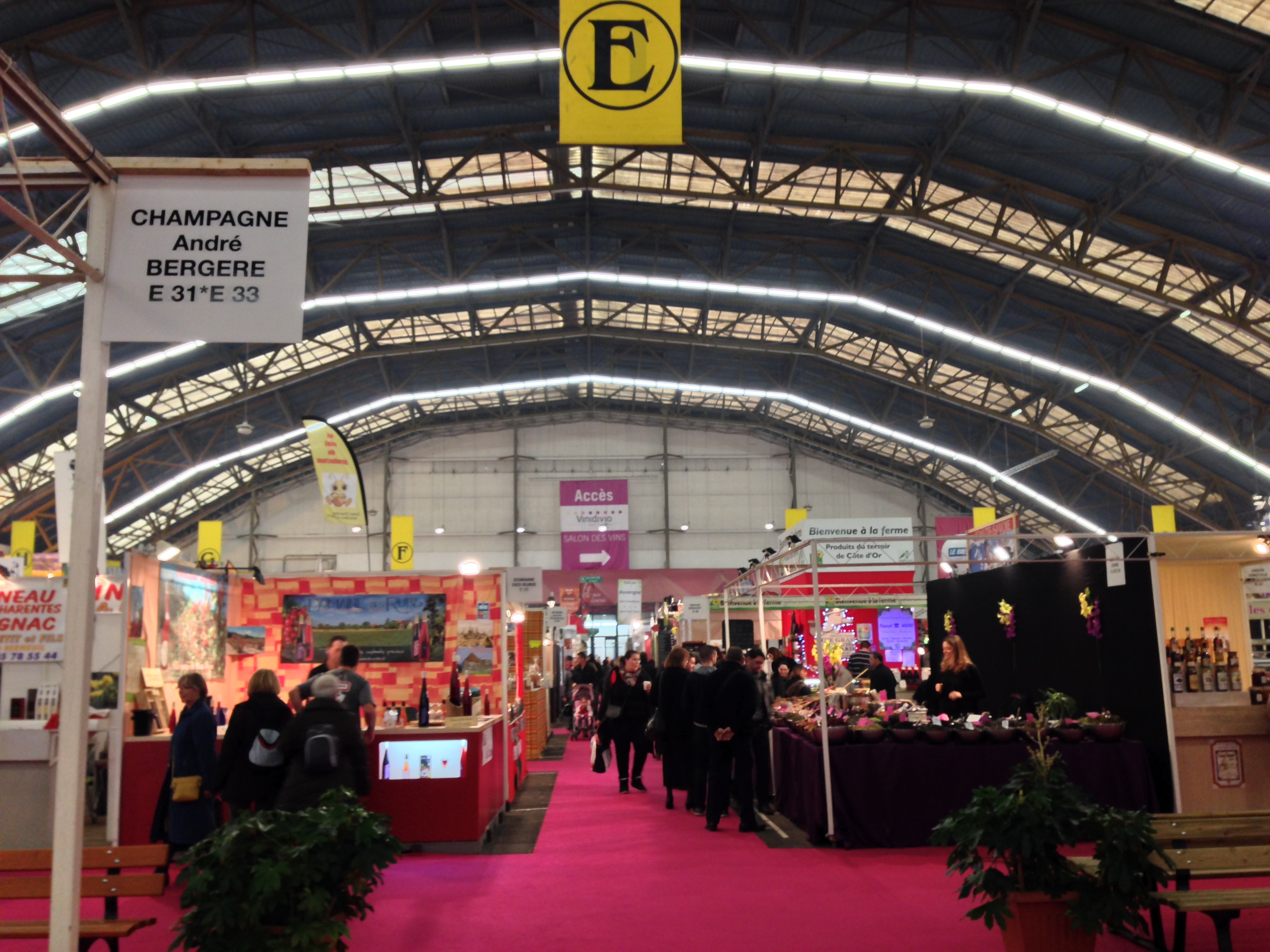
What brought me to Dijon, however, was not the mustard, or the “Kir” Dijon is known for – also known as crème de cassis, but the annual International and Gastronomic Fair, where over 500 exhibitors and 200,000 visitors flock for a taste of the region’s specialties. So, I hopped on a tram to arrive at the amazing Foire Gastronomique.

A paradise for foodies inside the Foire Gastronomique Dijon. Photo: Charlene Peters

Champagne is poured for a price, so I decide to sip an A. Bergere Champagne and sample Comte cheeses and more culinary delights, including escargot marinated in butter and seasoned with garlic and parsley. An order of pomme frites paired well with the Champagne as I strolled along the aisles holding the French specialty served in a paper cone.

A quick tram ride to the train station later, I’m headed to Beaune.

The Hospices of Beaune, established in 1443 by chancellor to the Duke of Burgundy – Nicolas Rolin and his wife, Guigone de Salins.

Google Mapping my way to the historic monument, the Hospices, I learn this is where some of the priciest wines are sold via a well-known wine auction. Although I didn’t have the opportunity to taste these wines, I did get a taste of the infirmary where, coincidentally, a woman in our small group fell ill. As I strolled through the “palace for the poor,” established in 1443 by chancellor to the Duke of Burgundy – Nicolas Rolin and his wife, Guigone de Salins – and listened on the audio-guide, I couldn’t help but wonder how the nuns would have taken care of my friend. I could almost see her lying in one of the many rows of beds. Fortunately, the pharmacies of France proved knowledgeable and within an hour of taking a recommended dose of a magic pill, the cheese-overindulgence side effects were a mere memory.

Off to the next stop, I ponder over the fact that the United States spends the most dollars on Burgundy wines of France, with the U.K. holding second place. In 2011 alone, 199 million bottles were sold, with the majority being white wine — mostly Chardonnay.

So, why are Burgundian red wines so special? Apparently, these wines are what they are due to their terroir, and some of the most expensive wines in the world come from this region of France. If you like pinot noir, these wines will send you swooning. They differ from American pinot noir grapes in that the Burgundian grapes are more fruit-forward, but they all pair well with savory, less spicy dishes.

To learn more, I stopped at Vins des Tonneliers, a distributer in Beaune that offers more than 500 Burgundy appellations selected carefully and personally from 52 family-run domains located in the Côte de Nuits and Côte de Beaune vineyards, the latter most famous for its white grand cru. With a few friends in tow, we tasted some local amuses-bouches and several rare wines made in small quantities from this distributor’s chilly wine cellar named La Vinif.

One Thursday each month, La Vinif offers “Thursday Aperitifs,” focusing on different themes and entertainment (visit Facebook page La Vinif – for members only). Customized service is what the Vins des Tonneliers offers, so for corporate events and parties, you can make an appointment for a full tasting, and this means with appetizers, to select the bottles of choice. Vins des Tonneliers will also help you with wine menus, corporate gifts, training, customer events, distribution and team-building seminars. The benefits of being a member of this organization include phone advice to those seeking wine pairing or wine-opening decisions on aging bottles, personalized notifications, occasional discounts, and access to private sales (membership fee is 150 euros/year). I walked out learning that dependent upon weather conditions, a white wine can be stored for 5 to 7 years, and a red for 8 to 10 years.

From Vins des Tonneliers, a 2008 Savigny-les-Beaune first grand cru “Aux Gravains” rouge.
From Vins des Tonneliers, a 2008 Savigny-les-Beaune first grand cru “Aux Gravains” rouge. Photo: Charlene Peters

I tasted an elegant chardonnay without a label, produced by a viticulturist, and a Pernand-Vergelesses ($25) that offered a clean, fresh minerality pairing nicely with cheese, fish, white meat – as an aperitif, and a puligne made from a wine merchant. As for the reds, a Pierre Bouchard 2011 Cote de Nuits-Villages ($17) offered licorice aroma and a spicy, young, delicious taste or raspberries and more red fruits, and a 2009 Domaine J.M. Boillet that isn’t titled as a grand cru – but it should be. This particular wine can be stored until 2024.  I also walked out with a bottle of 2008 Savigny-les-Beaune first grand cru “Aux Gravains” rouge that proved black current-forward when I tasted it, and opened it almost two months later for a special dinner of oysters, escargot and various French cheeses; it was a medium-bodied, flavorful pinot noir.

By 10 p.m. same day, I was back in Paris, satiated with wine tastings that paired well with adventure, and I now had a flavor of Dijon and Beaune, a destination I’d head back to for an overnight visit to sip and explore the various wine shops, bars and wineries in the walk-able circle. I also developed a strong thirst to return to Burgundy for a visit to the elusive Romanee-Conti, where one of the most expensive wine labels in the world is produced.

For more information, visit www.Visitdijon.com and www.beaune-tourisme.fr

Wine Tasting at O’Chateau

As the second part of a VIP Louvre Museum Night Tour and Wine Tasting offered by City Wonders, Paris has become even more interesting when a small group walked from an educational and highly interesting 2.5-hour tour within the Louvre to take a seat at the long wooden table within the historic stoned basement of O’Chateau. The history of O’Chateau is one filled with stories of its guests — dukes, ambassadors, princesses, countesses and all variety of important thinkers and writers of the time. Tonight, however, we are all VIP’s enjoying three wines and a plate of cheeses and hams while we learn about a few wines of France.

The first wine, an elegant Saumur 2012 cuvee vent du nord, was explained by the wine instructor, and the group listened intently about the regions within France from where each wine hailed. This chenin blanc grape was fruity and fresh, medium bodied and average. But, with the cheeses and jambon to which it was paired, worked perfectly.

O'Chateau wine tasting
O’Chateau wine tasting with City Wonders tour.

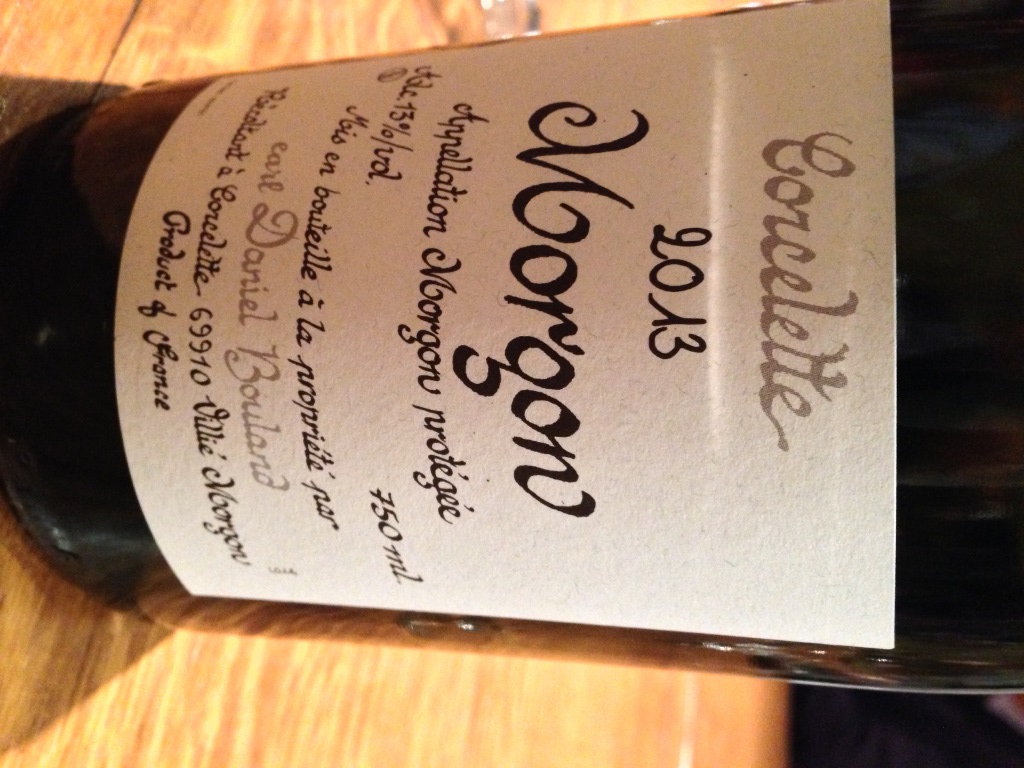
Next, a lesson in Beaujolais, France. This Corcelette Morgon 2013 is a wine made with a grape of the southern wine growing region in Burgundy and is referred to as its own appellation and not in the same category of Burgundian wines. It is light and dry, and we we are instructed to swirl and gaze at the ruby color of this gamay grape. We are enthralled in the process of tasting wine and devouring the cheeses and hams before us.

Finally, the malbec is poured. This is a 2012 Combel La Serre Cuvee Originelle Cahors from SW France. The instructor indicates its spiciness and bit of tobacco kick in the teeth. This is a wine that sells for around $10, and pairs best with beef and spicy food, mature and hard cheeses, as well as poultry. If you can find a 2010, this would be the better vintage.

So, the tasting was short and sweet, er… dry, actually if you refer to the wines, and after the closing of the tour, many in the group head upstairs to order a bottle of wine and food from the menu. At 10 p.m., the night has only just begun in Paris.

Visit http://www.citywonders.com/en/france/paris/paris-tours/louvre-tour-night-paris-wine-tasting to reserve your spot for a Skip the Line tour through City Wonders.

Ionian Jewel Tours to present ‘Umbria, Le March and Rome’ for March 2015

I’ve known the woman who runs these tours for a few years now, and Ionian Jewel Tours founder and president, Nancy Ursino Howard, is amazingly well-versed in all things Italy. So, I’m hoping to catch up with her and participate in the “Umbria, Le March & Rome Tour,” March 13-23, 2015.

Music, wine, food and fun will be all that surrounds from the time you land in Rome to start the tour. From Rome, the plan is to head to Assisi for a stay at Castello Di Petrata, where a relaxing day will lead to a fabulous dinner with wines of the region. On March 15, the day will be spent exploring the historic sites of Assisi: Basilica di San Francesco, Cathedral of Santa Chiara, Basilica of Santa Maria degli Angeli, and possibly The Church of San Damiano.

The culinary delight in this day will be either a rustic Umbrian lunch or dinner at La Stalla (The Stable) will showcase the cooking method of La Brace (hot coals) to create a rich smoky flavor. Another day will lead to the Etruscan town of Perugia, home to Perugina Chocolate. Within this historic center, there will be much time to savor the sights, shop and dine before heading to Cantina Chiorri for a wine tasting. The grape of Grechetto has Greek origins and was planted throughout central Italy, particularly in the Umbrian region.

Next stop: the town of Monteprandone in the Le Marche region, where the tour group will check in at Hotel/Agriturismo Il Sapore della Luna before heading out to explore the organic vineyard. The days to follow will include wine tastings, a visit to Ascoli Piceno, and possibly a visit to the Adriatic coast before heading to Rome. The Hotel Tiber at Fiumicino awaits, and once checked in, there will be tours of Vatican City, St. Peter’s Basilica, the Sistine Chapel, home to the Pope and decorated by the talents of Michelangelo and Botticelli. A walking tour guide will meet the group to continue touring historic landmarks such as the Spanish Steps, Fountain of Trevi, Roman Forum, Colosseum and Pantheon. Time on your own is in order to do some shopping or enjoy an espresso at a nearby cafe — or better yet, a gelato.

So, if you’ve always dreamed of visiting Italy and want to do it in style and avoid trying to figure it all out on your own, you’ll want to join the March 13 Ionion Jewel Tours excursion so that you can relax and enjoy every moment, knowing you’re taken care of by an expert.

So, by now you’re wondering how much? The cost for this tour (space IS limited) is $3,499.00, and includes airfare from Boston, two meals a day, the minibus/private driver/transfers, all excursions/hotels/double-occupancy accommodations, and wine, of course . What it doesn’t include is anything you do outside of the itinerary, such as wining and dining, or enjoying that gelato during your own exploration time. You will also be responsible for museum tickets and driver gratuities.

Ready to go? Email ionianjewel@gmail.com. Wanna learn more? Read the blog: www.ionianjewel.blogspot.com or follow Ionian Jewel Tours on Facebook: www.Facebook.com/IonianJewelTours

See you in Rome!

Sips and castles of Loire Valley, France

In a land southwest of Paris, you can discover over 1,000 castles — in Loire Valley, France. On a City Wonders Tour, you’ll also discover the history of France that leads to the Loire Valley and the river that proved difficult for enemies to navigate, hence the place where the King of France lived during wars. The Loire Valley is also known for producing some of the best cabernet franc grapes, as well as 80 types of goat cheese.

Two hours of a history-lectured bus tour led us to the first tour stop: Chambord, which was the inspiration for Disney’s “Beauty and the Beast.” The palace was built by King Francis I, styled in comparison to what he loved in Milan, Italy. It was built as a mere hunting lodge in the forest of Chambord. Today, the forest is a national reserve – the same as it was in the 16th century, except there’s a wall that closes the forest. Within the castle walls of this former hunting lodge, where today you can rent out the space for $150,000 a day, there are more than 300 rooms, 200 fireplaces and 80 staircases.

The City Wonders Tour includes lunch and a wine tasting at Chateau de Nitray. We are served the food of peasants: roasted chicken, potatoes, tomatoes, cheeses, salad and apple dessert, all accompanied with a wine tasting and tour of the castle grounds and rudimentary, barrel-less wine cellar. Chateau de Nitray’s vineyards have been around for 28 years, where six varietals of grapes include sauvignon blanc, chardonnay and chenin blanc as popular whites, and cabernet franc as the known red. The sauvignon blanc is sweeter than anything I’ve ever tasted, with citrus, melon, peach notes that lead to a tart finish. It does have great structure. The rose is made with cabernet franc; they utilize the red skins for about 10 hours to get that beautiful rose color.

Chateau de Chenonceau proves to be the most elegant of our stops. Home to the six ladies: Catherine D. Medici (Henri II’s mistress, then wife after she ‘removed’ Diana), Diana Poitiers (the castle was dedicated to Diana by husband King Henri II), Louise of Lorraine (Henri III’s wife), Louise Dupin (artist who saved the chateau during the Revolution), Marguerite Pelouze (transformed the castle to a luxury estate) and Simone Menier (of chocolate fortune and who nursed the wounded during World War II). The interior will leave you in awe, but my goal was to check out the cellar — the wine cellar, where a tasting bar lures a crowd for sips of three wines. This is also where you can buy some bottles to take home. My advice, however, is to avoid the three-pack. Choose your personal favorites, such as the cabernet franc.

Visit http://www.citywonders.com/en/france/paris/paris-tours to view the list of tours offered from Paris.

Chenin blanc from Loire Valley, France

If you’re in the mood for a neutral white wine, the chenin blanc grape is the way to go. A good pick is the golden yellow Anjou Blanc 2010, which hails from Chateau Soucherie in Samur, France, in the Loire Valley. The Loire Valley is known for its 1,000 castles and sordid history, but it’s also a superb growing region for chenin blanc grapes.

Chateau Soucherie’s Anjou Blanc is a supple wine offers white floral aromas and a long finish of creamy caramel that indicates a slight oak aging. It’s best served with shellfish, lean fish and fruity desserts. I’d enjoy this with oysters.

This 2010 Anjou Blanc won a silver medal at the 2012 Concours Mondial Bruxelles, which is a prestigious honor. And you can purchase this wine for 8,40 euro (U.S. $11). Oh, and you actually can find this in the U.S.

A grape unites the Finger Lakes and France

Riesling is king in the Finger Lakes.  This noble grape is the Finger Lakes most widely planted Vinifera variety with nearly 850 acres in production and almost every winery produces at least one Riesling brand. The microclimate conditions and the slate soils that are so special to the Finger Lakes are exactly what make Riesling thrive here.  The wineries of Finger Lakes Wine Country continue to be internationally recognized for their award-winning Rieslings in such publications as Wine Spectator, Wine Enthusiast, Food & Wine, Wine & Spirits, and Decanter.  Many of the region’s Rieslings have won many prestigious medals at wine competitions like Riesling du Monde, or Rieslings of the World, in the Alsace region of France.

The Finger Lakes Wine Alliance is thrilled to announce the official debut of the 2013 Finger Lakes Rieslings through its fourth annual Vintage Riesling Launch promotion, Sept. 230, 2014.  The month long celebration will include Riesling tasting events at restaurants, wine bars, wine shops, wineries, and specialty events throughout New York State.  Finger Lakes Wine Alliance will also host a virtual tastings including the popular Riesling Hour, a social media driven Finger Lakes Riesling tasting.

The 2013 Vintage Riesling Launch is the fourth annual celebration of the Finger Lakes release of a new Riesling vintage.  Following the successes of the Riesling Launch the past few years, we are delighted to celebrate the launch of the 2013 Rieslings.  Riesling tasting events will be held at restaurants, wine bars, wine shops, wineries, and specialty events throughout New York State throughout September.  Highlights of the celebration include two events in New York City, Harvest in the Square and Wine Riot.

The 2013 Finger Lakes Riesling Launch will be a sponsor of the 19th Annual Harvest in the Square for the fourth year in a row. The event, presented by Union Square Partnership, will take place at Union Square Park in New York City on Thursday, September 18, 2014 at 7:30 p.m.  Seventeen Finger Lakes Riesling producers will be paired with “chefs from the hottest and most popular restaurants in the Union Square District,” according to the Harvest in the Square website, to enhance the Riesling tasting experience for attendees through pairings with farm fresh culinary creations.   For more information, http://harvest.unionsquarenyc.org/.

Finger Lakes Rieslings will also be featured at the New York City Wine Riot. The Riesling Launch will have a wine booth at the Riot featuring 17 Finger Lakes Riesling producers for two days,September 1920, 2014, at the 69th Regiment Armory in Manhattan. The Wine Riot is an exciting event where consumers can taste and learn about wines from all over the world in a fun, comfortable atmosphere. For more information, https://secondglass.com/event-categories/wineriot/NYC-2014-fall/.

Another highlight of the 2013 Vintage Riesling Launch is Riesling Hour, the world’s largest Finger Lakes Riesling virtual tasting, on Saturday, Sept. 27, 2013 from 7:00 p.m. – 9:00 p.m. EDT.  Wine enthusiasts nationwide are invited to grab their favorite bottle of Finger Lakes Riesling, pour a glass, and join the conversation by sharing their photos and thoughts about the Riesling in their glass via Twitter using #FLXRiesling or the Finger Lakes Wine Facebook Fan Page.  In addition, there will be a media-exclusive virtual tasting focused on 2013 Finger Lakes Riesling; #WineChat onWednesday September 10, 2014 from 9:00 p.m. – 10:00 p.m. EDT.

More information about all events for the 2013 Vintage Riesling Launch can be found at www.RieslingLaunch.com

Sipping a 2 euro bottle of Bordeaux

Not since the days of Trader Joe’s 2-Buck-Chuck have I seen anything like what I experienced upon my arrival in Paris. Once settled in at my apartment, a trip to purchase miscellaneous supplies at the Monoprix led me to a display of Bordeaux wine bottles on sale if you bought two or more. I could only carry so much, so I bought one bottle at full price: 2 euro. My goal was to unpack my bags until I found the corkscrew I had packed. By the third bag, I had found it and called it a night. I opened that bottle and poured my first glass into a drinking glass, as there were no wine glasses in the apartment (there is one now). This Vin de Bordeaux proved young, but grape-forward delicious. 

It did not have the intense complexity of a 2011 Louis M. Martini cabernet I enjoyed in the U.S. before I left for Paris, but it was definitely worth sipping. I can’t wait to try out more wines that aren’t available in the U.S., including some of the Brancaia wines I tasted in Tuscany a few years ago, as well as variations of LaMarca Prosecco. I did manage to get a bottle of 2011 Brancaia TRE, IGT Rosso Toscano while in the U.S., which brought me back to the hills of Chianti, where I once enjoyed a surreal experience dining on the Brancai Estate, hosted by the uber talented winemaker, Barbara Widmer.

Wines certainly break the barrier of communication throughout the world, but for now, I’m concentrating on Bordeaux, a destination I will surely visit soon.

My return to France

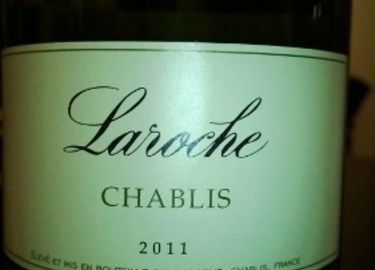
On my third trip to France, in 2009, I enjoyed a day spent driving in a convertible Citroen with a winemaker in Chablis, who toured me through the terroir and educated me in tasting some of the best white wines in the world. As far as the U.S. is concerned, Chablis brings back memories of jug wine. But that is simply not the case; Chablis is sophisticated and elegant, with perfect acidity and grape-forward loveliness in taste. So, while on a Holland America Line ms Westerdam cruise, I dined at the Pinnacle Grill, where the sommelier offered two choices: I chose Laroche Chablis 2011, and I was not disappointed.

The bright gold color gave way to intense notes of almond and white blossom, and paired perfectly with Alaskan salmon.With every sip, I was sent back to Chablis, a trip that began and ended in Paris, where I am now living for the next year, and where I plan to sip my way through every wine region possible. 

Sante!