Category Archives: Wine Reviews

The cheesy little planet of Napa Valley

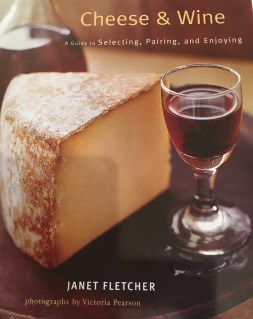
Ever since I arrived to my new life in Napa Valley, California, I’ve felt like I’ve been living on another planet. The people are of a different nature than what I’m used to, having lived my whole life on the East Coast.They’re not European, but the landscape has a strong Burgundian familiarity. So, it was fitting to take a seat at Beringer Vineyards for a cheese and wine tasting with Janet Fletcher (pictured below), publisher of “Planet Cheese.”

JanetFletcher2

The stars aligned for me to sit in on this tasting event that began with a West Marin Nicasio Valley Foggy Morning cheese made with cow’s milk. To match the intensity of this delicate, young farmstead cheese, we each received a pour of 2013 Luminus Chardonnay, Oak Knoll ($38) made with grapes from north of Napa on a flat vineyard that allows even ripening and balance of fruit. The nose on this Beringer white offered apricot, and flavors of mango.

“This is a good aperitif wine,” stated Janet.

Its crispness brought forth a slight intensity, and I agree: it is a great wine to start off an evening. The cheese brought the wine forward, and so we moved forward to the next pairing.

***

Point Reyes Farmstead Toma has been around for almost 8 years, hailing from Marin County. This is another farmstead cheese, which means it has its own cows. Its commonality is with Gouda, and would go well with beer and lots of wine choices. We enjoyed a glass of 2013 Private Reserve Chardonnay, Napa Valley ($46) made with grapes grown on vineyards in Yountville. The cheese was moist and creamy…butter aromas and crème fraiche taste, while the wine offered a nose of pear, pineapple and intense elegance. The cheese didn’t stand alone. It was a good match.

***

Next, Vella Mezzo Secco of Sonoma County was served with a Beringer 2012 Quantum, Napa Valley ($65) made with grapes from vineyards of Howell Mountain and Saint Helena. This is a Bordeaux-style blend of earthiness from cabernet sauvignon (70%) grapes, merlot, malbec, petit verdot and cabernet franc. A nose of deep chocolate, smoke, dark berry led way to good tannin structure and a silky finish of baking spices. The cheese was drier than the rest, with more grain and deeper flavor…made from raw cow’s milk. Its aroma was on the nutty side, but I also detected a brown butter scent.

***

Number four on the list was Bellwether Farms Blackstone, which is a new cheese on the market made from cow’s AND sheep’s milk of Sonoma County.

Bellwether Farms Blackstone with Beringer 2012 Steinhauer Ranch Cabernet Sauvignon  was my favorite of the tasting.

The rind has ash on it, which adds a peppery aroma to the already buttered, peppered lamb scent. Paired with a 2012 Steinhauer Ranch Cabernet Sauvignon, Howell Mountain ($110), the earthy, jammy, pie filling flavor was amazing. Aged in 95% new French oak barrels, notes of dark chocolate/mocha, toast level of perfection and cigar, cedar offers a glimpse to its age-ability of 15-20 years to which this wine might be laid down.

***

Last pairing: Bleating Heart Cheese Fat Bottom Girl, made with sheep’s milk from Marin County and paired with a 2012 Private Reserve Cabernet Sauvignon, Napa Valley ($165). This wine is made for private reserve from grapes of Howell Mountain and Saint Helena. This is Beringer’s most sought after bottle, according to Janet. The cheese is dry, almost brittle, and like the cheese, this wine was not my favorite. Or at least it needed to be decanted.

At the onset of this tasting, our group of 35 to 40 in attendance was instructed to start with the cheese, then chose the wine. But know this… You will never get a “horrible pairing” of cheese and wine. It’s simply that some cheeses are better when served with a particular wine.
Fletcher3

I would attend another of Janet’s classes, if I can find one with an opening. If the below schedule of sold out classes is any indication, she is a popular speaker, author and cheese guru. Check it out:

Single class: $65
Monday, March 7:  SOLD OUT Mambo Italiano
Monday, April 4:  SOLD OUT The Hills Are Alive! Alpine Cheeses from France and Switzerland
Monday, May 2: Best of the British Isles
Monday, June 6: SOLD OUT Locavore Night: Notable Newbies from Northern California
Monday, July 11: SOLD OUT Bubblemania
Monday, August 8: Artisan Cheese & Craft Beer: Seven Slam-Dunk Pairings
Monday, September 12: Blue-Ribbon Winners from the American Cheese Society
Monday, October 3: Cabernet Country: Great Cheeses for the King of Reds
All 8 Classes: SOLD OUT Grand Tour
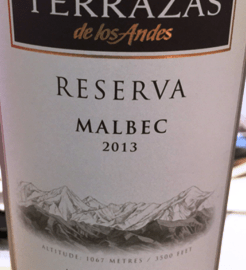
Wine of the week: Terrazas de los Andes

Priced under $20, Terrazas de los Andes 2013 Reserva Malbec is my find of the week!

This inky, medium-bodied red wine offers a strong bouquet of violets and dark fruits that match on the palate with the added bonus of a tobacco finish. Point of note: the Malbec grape is one of the original 5 Bordeaux grapes that have since dwindled on French soil. France’s loss is Argentina’s gain. In fact, this winery uses ungrafted Malbec vines that were planted in 1929. The vines grow over 1,000 meters above sea level.

As an investment wine, Malbec is known for its ability to bottle age, but I wouldn’t know. Although I savored this bottle over the course of a week, it was opened and emptied without a thought of storage. I’ll be on the lookout for more of Terrazas, which is one of the top 25 Argentinian Malbec wines in the U.S., best served with spicy beef, lamb and poultry.

The higher priced wine I recently tasted: a 2015 Cloudy Bay Sauvignon Blanc (just under $30) did not thrill me as much as the Malbec. Sauvignon Blanc, or “the wild white” is a staple wine of New Zealand, but this Marlborough version was a bit too sweet for my taste. Perhaps I don’t care for the wet granite sensation mixed with wet freshly mown grass. Maybe this would have tasted better paired with a plate of green olives. I would try it again, but this round left me clouded.

Channel your inner queen at The Palace

Life in Northern California offers endless opportunities for day trips and weekend visits to explore small coastal towns or big cities like San Francisco.

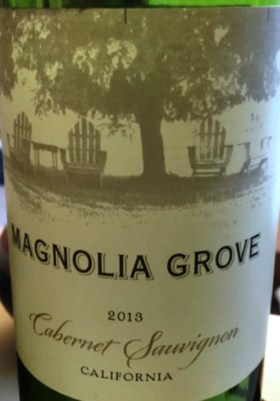
So, I spent a night in San Francisco following a short visit to a friend’s house in Sacramento. The first thing I did was relax with a glass of Magnolia Grove 2013 California Cabernet Sauvignon.

magnolia
Magnolia Grove 2013 California Sauvignon, priced at just under $10 a bottle.

This wine is an average, well-priced garnet-toned Cabernet made from grapes of Sonoma County. I wouldn’t complain about it – it was tasty! — but there really wasn’t anything complex about it.

For my palate, this is a drink-alone, medium bodied, great all-around table wine.  The Magnolia Grove of Chateau St. Jean would be the perfect spot to sip this berry and cherry-flavored wine.

Although I was not in Sonoma when I drank it, I was enjoying my first experience exploring San Francisco. This bottle of Magnolia Grove was left as a gift during my stay at the Palace Hotel, A Luxury Collection Hotel. This was the start of channeling my inner queen.

Cowgirl CreameryA round of Cowgirl Creamery cheese was left with an assortment of crackers. Yes…

My room at the Palace Hotel, which, by the way, was originally built in 1875, was so inviting, especially after a long evening enjoying the company of good friends and perhaps too much wine the previous night. I would have been perfectly happy to crawl under the crisp, clean sheets and watch the big screen TV and sip wine paired with Cowgirl cheese and crackers. But…I was in San Francisco for only one evening, so the plan was to explore the dining scene. I had already spent the afternoon in Fisherman’s Wharf, which was amazing if only to watch the seals compete for space to sun on the dock. I wasn’t hungry, but if I were, it would have been a great place to select any number of culinary delights — from seafood to burgers and chowder, and lest not forget See’s Candies or Ghirardelli Square, the latter a stone’s throw from the area.

I can now say that I rode the cable car in San Francisco, and I live to tell the tale. I had no idea it would be so thrilling, and quite similar to a roller coaster in that you creep uphill in a struggle; fortunately you do not coast downhill, but it is a steep slope and the struggle of the car to keep a slow speed conjured up thoughts of broken cables and a runaway car from movies and televisions shows I’ve seen. Now that I’ve done it, I don’t need to do it again.

My day was full, I was tired, and when I stepped into the Palace Hotel, I wanted to remain there for a few days…at least. Why wouldn’t I? The lobby entrance was palatial, keeping in line with the theme of ornate interior design. Inside my modest, but very comfortable room, a toilet with options! A warm spritz later, I was out on the town — to Telegraph Hill to enjoy an Italian dinner at Original Joe’s in North Beach, with the Rat Pack overhead. Before I knew it, my virtual crown was left behind and I was on the rode again. San Francisco, I’ll be back soon!

RatPack
At Original Joe’s.


Weekend in Burgundy: Les Deux Chévres 

If history and wine cannot be separated, then Burgundy is a prime example. The monks are the common denominator, who from the 6th century until the French Revolution were largely responsible for the development of the Burgundy viticulture that we know today. As of 2015, the vineyards and wineries of Burgundy and Champagne, mainly the climate and terroir, are listed by UNESCO as World Heritage sites. What this means to the businesses in these regions of France is yet to be determined. Burgundy, in particular, is a conglomeration of small villages unable to accommodate hordes of tourists, but more exposure to the area’s history is no doubt going to highlight a tourist’s visit.

View from my room
View from my attic room.

One of the best areas to explore Burgundy is in the heart of the world’s most expensive Romanée-Conti vineyard at the foot of the Combe de Lavaux: Gevrey-Chambertin. This wine village is a seven-minute train ride from Dijon, and among a few gites and hotels, the luxury inn, Les Deux Chévres, is but a short car ride to a five-star experience. For the couple who manage the 10-rooms within this inn, it is an all-encompassing life commitment.

Guests filter in and out for a night or two, seven days each week. For innkeepers/owners Paul and Jolanta Thomas, a schedule of rising at the crack of dawn and resting at midnight is common. As the precursor to running this inn, the couple endured a three-plus year renovation during some harsh winter months, roughing it with no windows or heat, and working with a crew that spoke a different language. The biggest challenge began within the start of renovations, when Paul had to exit the country to tend to his folding U.K. business. The stress took its toll on Jolanta, who continues to suffer from migraines and isn’t as relaxed as her husband or the guests to which he offers pours of wine with an open heart and obvious passion to be in Burgundy.

Les Deux Chévres is the story of two stubborn goats: Paul, a lawyer from the U.K., and Jolanta, a Polish woman determined to follow-through a challenging renovation. Its lure is its location in Burgundy, where some of the world’s best wine is available (a bottle of grand cru can cost 500 euros), and where Les Deux Chévres is a bike ride away from the grand cru vineyards and wineries.

Breakfast view on property.jpg
Breakfast on property at Les Deux Chevres.

Cobblestoned streets connect the grand carpet of vineyards viewed from the windows of this peaceful property. The only noises heard are the morning cock-a-doodle-doo’s and dinnertime clink of wine glasses as the village restaurants set outdoor patio tables. Although winters may be harsh, the area’s grapes thrive on the baking hot sun of summertime and its cool nights. In July, the grapes are pea-sized, but soon enough ready for harvest.

There are 10 guestrooms and a converted attic space a circular staircase away, where the aroma of fresh-cut wood is telltale of the new construction and the window view looks out to vineyards that roll up and down through Gevrey-Chambertin. Artist Joyce Delimata’s artwork of the vineyards are sold in the boutique shop in the reception area.

A tasting

A day visit to Chateau Villars Fontaine Le Cos du Chateau, only 10 kilometers away, offers a flight of tastings, beginning with a 2010 Les Jiromees from Cote de Nuits, with a mushroom nose. Winemaker Bernard Hudelot is a legend in Burgundy, known for making wines that can last 30 years or more. The finest wine tasted is a 2012 Gevrey Chambertin Grand Vin De Bourgogne. This pinot noir is less fruit-forward than California pinot noir, as Burgundy is all about terroir. Tres bon. Another great sip is a 2013 Puligny-Montrachet Vielielles Vignes made from Chardonnay grapes in the area (did you know that 60-% of Burgundy’s overall production is white wine, most of which is Chardonnay?). A floral aroma dominates the subtlety of beeswax and offers a rich mouthfeel with mineral complexity and lingering finish. The 1994 tasting can only be described as awesome, and a 2006 offers layer of licorice and baking spices. Worth noting is that some Burgundy reds are aged 48 months in new French oak barrels, spending two years in one barrel before switching to a new one for another two years.

Dinner is best served down the road from Les Deux Chévres, at Chez Guy, beginning with a Cremant Bourgogne de Champagne and a plate of green olives and thumb-sized popovers. The chef’s amuse bouche is a beetroot mousse topped with pine nuts and eye of bread topped with celery cream and caviar. Oh, yes.

Back at the inn, there is information about an upcoming wine school for visitors who would like an introduction to Burgundy wine, and in particular the wines of Gevrey-Chambertin. With 600 hectares under vine, Gevrey is the largest and most important wine producing commune north of Beaune, boasting no fewer than nine Grand Cru wines to its name. Today, there are half-day courses available in the luxurious 19th-century salon of Les Deux Chévres. Wine instructors include Mark Fincham, the only English winemaker in Gevrey-Chambertin, and one of the few making wines biodynamically; Sandrine Lanaud, who has a degree in molecular biochemistry, yet devotes her life to the subject of winemaking in her native Burgundy; and other members of the team include Matthieu Aravantinos, chief taster for Les Deux Chévres, and consultant Tim Magnus, qualified WSET Level 4 – just below MW.

For an English-speaking tour guide, U.S. historian Kelly Kamborian is the best, and works with Les Deux Chévres to offer some of the best tours of Burgundy, including a photo stop at Romanée-Conti. Check out her video on The Story of Wine and Burgundy: www.theburgundyshop.com/historicaltours

For more information about wine education and a stay at Les Deux Chévres, visit www.lesdeuxchevres.com. Note: Featured image is a drawing by Els Baekelandt.


***

The story of two goats

In 1694, the famous French writer and poet Jean de La Fontaine, wrote his final series of Fables, and one of them was about two goats. The story did not actually call for goats – it just needed two nimble and agile creatures with perfect balance and a head for heights. Can anyone think of a creature more apposite than a goat? Probably not, and nor can we. And this is where the problems start. Because de La Fontaine was writing about the unfortunate consequences of a refusal to compromise. Always topical! To illustrate the point, both of de La Fontaine’s protagonists were prepared to be crushed to death on the rocks below, or swept away in the raging torrent – rather than let the other animal cross the bridge first.

But this was only a Fable, you say – the goats were only used to convey the message that compromise is a better option. However de La Fontaine was the most famous poet and writer in France, and his works were published around the world. And so anyone reading the Fable, would come away thinking – what complete clots these goats must be. And so it has been ever since. In every country where the Fables have been published, there is a saying or expression associating our breed with stupidity or obduracy. We have been made into fools. For this reason, we have decided to respond.

We need to recognize Monsieur de La Fontaine’s tale for what it is – a poorly researched negationist fabrication! Strong words you say! – but we reply : how would you like to be held to ridicule for 300 years, and repeatedly put on a par with the mule in terms of cognitive functioning?

On behalf of myself Archimedes, my mate Tensy, our 674 million cousins (not to mention 1.4 billion of our Chinese friends in the Year of the Goat!) – we invite you to read the true story of The Two Goats at www.lesdeuxchevres.com

– Archimedes and Hortensia

Toscana Resort Castelfalfi and a taste of Poggionero 2012

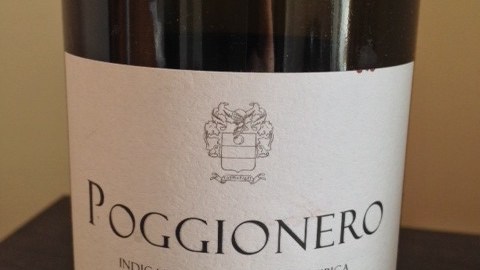
Poggionero 2012 was a good vintage for this authentic Tuscan wine, grown on one of the most beautiful estates I’ve ever had the pleasure to visit in Tuscany: Castelfalfi. The breakdown of grapes are 50 percent cabernet sauvignon, 40 percent merlot and 10 percent alicante. Twelve months in barrels resulted in this ruby-colored, depthful taste of Tuscany’s terroir translated into elegance and sophistication. Sipping on this wine brings back memories of my visit during a chilly spring Easter weekend, where I enjoyed dinner in La Rocca Castelfalfi, a castle that hosts a Michelin-star restaurant/chef.

On my way to Castelfalfi, the winding road was almost invisible due to the distant fog. The weather’s uncooperative nature led me to drift in imagining myself meandering along the pathways that tied the estate together like the wrapping of a luxurious gift. All I was able to view was a peek of exquisiteness in the surrounding view. And that was good enough for the moment. The scene of rolling vineyards and Tuscan farmhouses pressed against a sleepy blanket of misty air was almost too beautiful to bear, to the point where my eyes moistened in thoughts of reality; this scene was not digitally-enhanced. The following day, as the fog unwrapped to a glorious definition of resplendent landscape I witnessed from my Hotel Tabaccaia terrace, I began to understand the succinct and sensory title of being under the Tuscan sun.

Olive treesOlive and Cypress trees at Castelfalfi Resort in Tuscany.
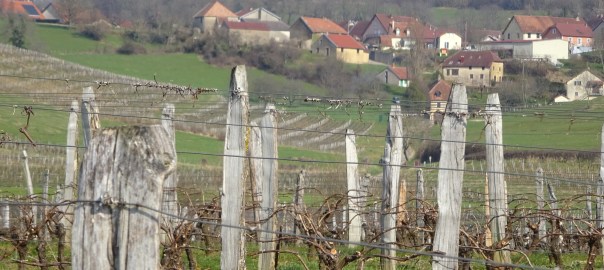
From Florence, the drive to Resort Castelfalfi is approximately one-hour, and the conversation about the habits of wine drinkers in Italy versus the U.S. revealed just what I imagined — that drinking wine is part of a culture in Italy, while in the U.S. it is an indulgence triggered by the need for social lubricant.

In Italy, a child grows up drinking wine diluted with water, which educates the palate for tasting wine to its fullest potential by the time of adulthood. In fact, as part of a debut into adulthood, in Italy, participation in a wine harvest is a ritual experienced for youth “coming of age.” With this concept in mind, I cannot help but wonder if what I taste at Castelfalfi might only be tastier had I been drinking diluted wine as a young girl growing up in the U.S. Alas, I was not in the U.S., but in Tuscany, where I plan to return time and time again, if not for the wine, but for the olives and oil, as well as the incredible Italian dishes and friends I made along the way.

What I learned at IWINETC 2015 in La Champagne, France

I only drink Champagne on two occasions, when I am in love and when I am not.

– Coco Chanel

I stand in the cellar at Champagne Collet in Aÿ, in the heart of the Champagne region, where one million bottles a year are produced. The historic cellars which were once a refuge during war are now home to some of Champagne’s finest caves, where millions of bottles age for our eventual palatable pleasure. As an attendee at the International Wine Tourism Conference 2015, held this year in La Champagne, France, I was honored to receive a hands-on education in Champagne making and tasting.

“The bottles are placed in a 45-degree angle, necks down in the pupitres,” our guide explains, and the riddler turns the bottles every one to three days over a period of several weeks. Referred to as “remuage,” the process of riddling was invented by Widow Clicquot of Veuve Clicquot fame. Today, most Champagne bottles are riddled mechanically, but the ridge-lined shape of this particular Collet bottle does not fit within the parameters of the machine and must be turned manually.

Champagne Collet's Esprit Couture Brut
Champagne Collet’s Esprit Couture Brut, 

A bottle of Esprit Couture was bestowed upon me, and I recently had the pleasure of sharing it with friends. This is a Champagne crafted entirely by hand from start to finish utilizing Collet’s finest crus in a blend of 40 percent Chardonnay (for elegance and finesse), 50 percent Pinot Noir (for depth and structure) and 10 percent Pinot Meunier (fruit flavor).

This particular Champagne is aged for a minimum of five years within Collet’s chalk cellars.

Upon sipping this amazing bubbly, there was no doubt it was just that… fine effervesces gave way to vanilla and floral aromas with a taste of minerality and citrus blended perfectly for the palate.

Perhaps it is in the crafting of a selection of grapes from twenty vineyards in La Champagne, but the delicate aromas and flavors, like melting roses on my palate, wins my praise once I sip Collet’s privee rosé dry Champagne. This is a blend of pinot noir and chardonnay grapes with a bit of pinot meunier for its fruitiness, aged four years in a century-old chalk cellar.

The next morning, my tour on the Champagne Trail continues with a half-mile-long stroll on Avenue de Champagne in Epernay, where I walk on top of 200 million bottles of bubbly. Or so I’m told.

Thoughts about taste and terroir dominate my mind as I reflect on my journey through the wine regions of France. Author and scholar Barbara Kirshenblatt-Gimblett once conducted research on sensory pleasures in food, citing the fact that “Wine is alive”— “It matures over the years and changes even in a few hours. It is an event. Even a single taste can be like an act in a play that is as long as the life of the vintage.” I would have to agree.

To view Collet’s video on Champagne’s tradition, click here.

Walnuts, vin jaune and Comté cheese

Not all wines are created equal. In 1990, Jean-Michel Petit tasted his first vin jaune in Pupillin, located in the Jura region of eastern France. By 1997, he had bottled his first barrel at Domaine de la Renardière, located on rue du Chardonnay. Today, he has 65 barrels filled with the grape of the region: savignin. To make vin jaune, these grapes are plucked late harvest to transform their structure in a unique process to the appellations of Arbois, ultimately producing a deep yellow wine aged anywhere from 5 to 50 years in old oak barrels.

Siting a vineyard on a slope offers better sun exposure, Jean-Michel explains, but as I stand on the highest point looking down at the bowl of vineyards in the Jura region of France, my thoughts connect the past to the present. In fact, this land was once underwater and has left behind fossils we easily find among a pile of rocks near the vineyards. Oyster shell imprints are indicative of the soil structure similar to that of the fine wines of Chablis and even some areas of Champagne, but with added limestone instead of chalk.

With both flat vineyards and sloping, Jean-Michel, owner of Domaine de la Renardière, has the best of both worlds: New World and Old World. He gets to grow grapes and make wine in the old tradition, but incorporate modernity at his will.

“If you know good basics, you can grow grapes,” he states during a tour of his property that has been in existence since the 13th century. He grows five grapes on his land: the original chardonnay and pinot noir, and the regional ploussard, trousseau, savignin, the latter to make the Jura’s unique savignin jaune.

In the last year, Jean Michel’s vineyard has been utilizing biodynamic methods, partly dictated by the lunar calendar. There are certain days when, he says, “it is best to stay indoors all day.” On these off-lunar days, work on the vineyard is on hold. At this time, the buds are about to break open.

Savignin jaune intrigued and distracted me from Jean Michel’s introduction to his white and red wines our group tasted straight from the used oak barrels. I wanted him to get to the point, which was the process of making yellow wine that can be grown only in this Jurassic soil. This wine is not aged in a cellar, but in an attic inside barrels never topped off. In a strange development that has not yet been scientifically explained (nor will it ever be to protect its AOC status), a veil of yeast forms on the wine, which protects it from oxidizing and adds intense aromas and flavors. Forty percent is lost in the barrels, and once in its unique-shaped bottle called a “clavelin,” vin jaune will keep for 6.5 years. Once the process is over, Jean-Michel sells his used barrels to a whisky producer; the whiskey will then acquire some vin jaune to its recipe.

Finally, we are offered a pour of vin jaune. Its aroma of sherry and walnuts surprises me, and sipping it surprises me even more so, as this wine tastes nothing like sherry. It offers intense acidity and tastes like a deeply concentrated 15-percent alcohol white wine best enjoyed following a meal with a plate of Comté cheese and some walnuts. It also pairs well with curry, dark chocolate and sausages, or so I am told. In fact, it was suggested to add a little in an omelet, and to make a recipe that includes chicken, mushrooms (morrels) and cream, with, of course – some vin jaune.

One day, two cities: Dijon and Beaune of Burgundy

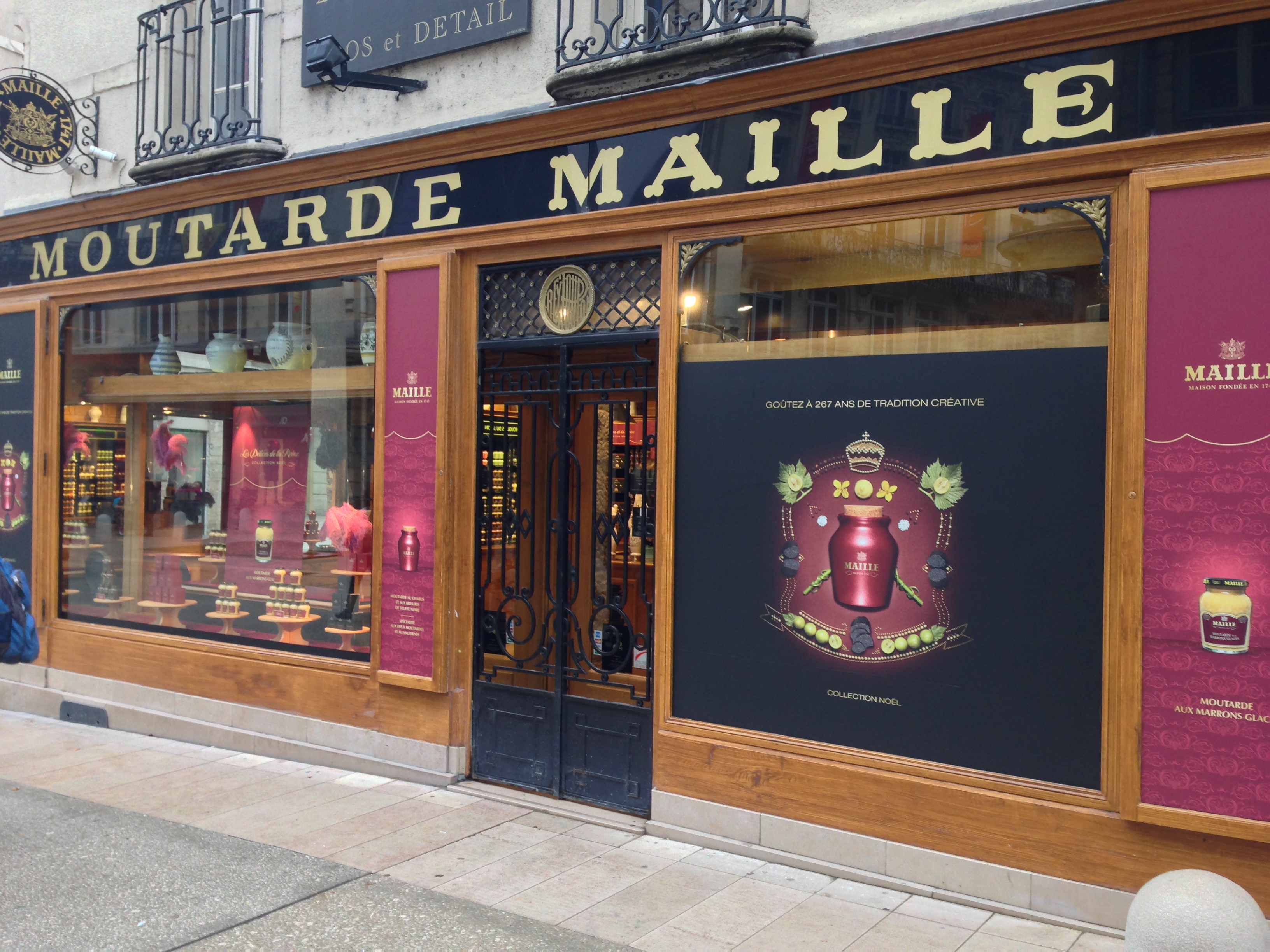
Hold the mustard… not! You’ll want to taste plenty of varieties in Dijon, where the TGV arrived early one morning to drop me off to a place where some of the world’s best mustard is produced and sold. In Dijon, mustard is everywhere and in all colors and flavors. It is here where I purchase a jar of mustard blended with Modena balsamic vinegar to bring home for a later indulgence. Once tasted, it proved worthy of another train ride to get more of this specialty to the Burgundy region of France.

Famous for its Dijon mustard, which originated in 1856, we can give thanks to Jean Naigeon, who substituted the green acidic juice of unripe grapes for vinegar, introducing the tasty and traditional recipe.

Aside from mustard, Dijon offers a city of history, and I partake in a brief walking tour offered by the Dijon Tourism Office to shed some light on the small area’s historical background. From Notre Dame to the Romanesque Dijon Cathedral to the Rue des Forges and Maison Milliere, I stroll along the cobblestone streets in awe of this quaint city in Eastern France.

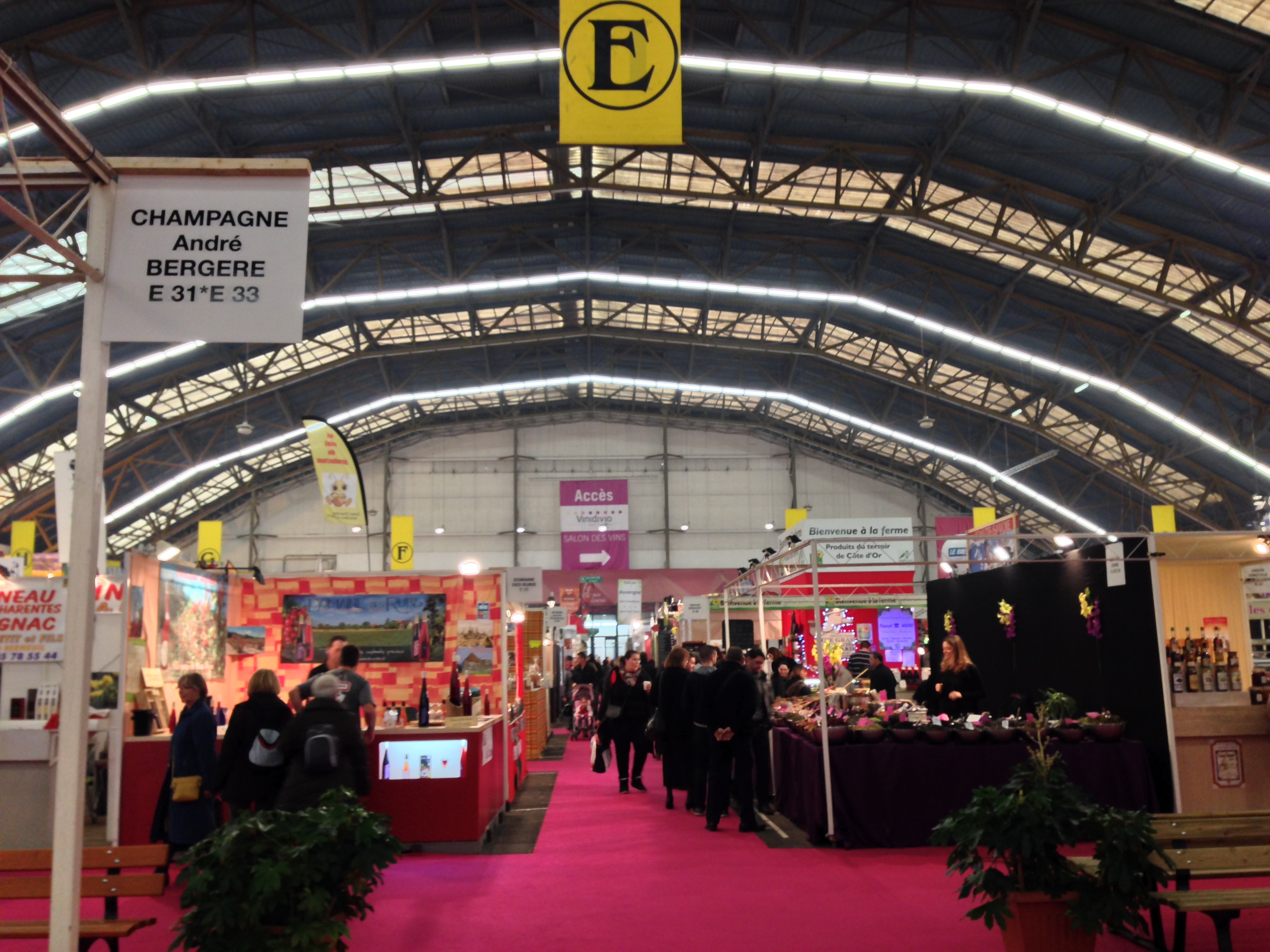
What brought me to Dijon, however, was not the mustard, or the “Kir” Dijon is known for – also known as crème de cassis, but the annual International and Gastronomic Fair, where over 500 exhibitors and 200,000 visitors flock for a taste of the region’s specialties. So, I hopped on a tram to arrive at the amazing Foire Gastronomique.

A paradise for foodies inside the Foire Gastronomique Dijon. Photo: Charlene Peters

Champagne is poured for a price, so I decide to sip an A. Bergere Champagne and sample Comte cheeses and more culinary delights, including escargot marinated in butter and seasoned with garlic and parsley. An order of pomme frites paired well with the Champagne as I strolled along the aisles holding the French specialty served in a paper cone.

A quick tram ride to the train station later, I’m headed to Beaune.

The Hospices of Beaune, established in 1443 by chancellor to the Duke of Burgundy – Nicolas Rolin and his wife, Guigone de Salins.

Google Mapping my way to the historic monument, the Hospices, I learn this is where some of the priciest wines are sold via a well-known wine auction. Although I didn’t have the opportunity to taste these wines, I did get a taste of the infirmary where, coincidentally, a woman in our small group fell ill. As I strolled through the “palace for the poor,” established in 1443 by chancellor to the Duke of Burgundy – Nicolas Rolin and his wife, Guigone de Salins – and listened on the audio-guide, I couldn’t help but wonder how the nuns would have taken care of my friend. I could almost see her lying in one of the many rows of beds. Fortunately, the pharmacies of France proved knowledgeable and within an hour of taking a recommended dose of a magic pill, the cheese-overindulgence side effects were a mere memory.

Off to the next stop, I ponder over the fact that the United States spends the most dollars on Burgundy wines of France, with the U.K. holding second place. In 2011 alone, 199 million bottles were sold, with the majority being white wine — mostly Chardonnay.

So, why are Burgundian red wines so special? Apparently, these wines are what they are due to their terroir, and some of the most expensive wines in the world come from this region of France. If you like pinot noir, these wines will send you swooning. They differ from American pinot noir grapes in that the Burgundian grapes are more fruit-forward, but they all pair well with savory, less spicy dishes.

To learn more, I stopped at Vins des Tonneliers, a distributer in Beaune that offers more than 500 Burgundy appellations selected carefully and personally from 52 family-run domains located in the Côte de Nuits and Côte de Beaune vineyards, the latter most famous for its white grand cru. With a few friends in tow, we tasted some local amuses-bouches and several rare wines made in small quantities from this distributor’s chilly wine cellar named La Vinif.

One Thursday each month, La Vinif offers “Thursday Aperitifs,” focusing on different themes and entertainment (visit Facebook page La Vinif – for members only). Customized service is what the Vins des Tonneliers offers, so for corporate events and parties, you can make an appointment for a full tasting, and this means with appetizers, to select the bottles of choice. Vins des Tonneliers will also help you with wine menus, corporate gifts, training, customer events, distribution and team-building seminars. The benefits of being a member of this organization include phone advice to those seeking wine pairing or wine-opening decisions on aging bottles, personalized notifications, occasional discounts, and access to private sales (membership fee is 150 euros/year). I walked out learning that dependent upon weather conditions, a white wine can be stored for 5 to 7 years, and a red for 8 to 10 years.

From Vins des Tonneliers, a 2008 Savigny-les-Beaune first grand cru “Aux Gravains” rouge.
From Vins des Tonneliers, a 2008 Savigny-les-Beaune first grand cru “Aux Gravains” rouge. Photo: Charlene Peters

I tasted an elegant chardonnay without a label, produced by a viticulturist, and a Pernand-Vergelesses ($25) that offered a clean, fresh minerality pairing nicely with cheese, fish, white meat – as an aperitif, and a puligne made from a wine merchant. As for the reds, a Pierre Bouchard 2011 Cote de Nuits-Villages ($17) offered licorice aroma and a spicy, young, delicious taste or raspberries and more red fruits, and a 2009 Domaine J.M. Boillet that isn’t titled as a grand cru – but it should be. This particular wine can be stored until 2024.  I also walked out with a bottle of 2008 Savigny-les-Beaune first grand cru “Aux Gravains” rouge that proved black current-forward when I tasted it, and opened it almost two months later for a special dinner of oysters, escargot and various French cheeses; it was a medium-bodied, flavorful pinot noir.

By 10 p.m. same day, I was back in Paris, satiated with wine tastings that paired well with adventure, and I now had a flavor of Dijon and Beaune, a destination I’d head back to for an overnight visit to sip and explore the various wine shops, bars and wineries in the walk-able circle. I also developed a strong thirst to return to Burgundy for a visit to the elusive Romanee-Conti, where one of the most expensive wine labels in the world is produced.

For more information, visit www.Visitdijon.com and www.beaune-tourisme.fr

Hard pressed to resist Beaujolais Nouveau

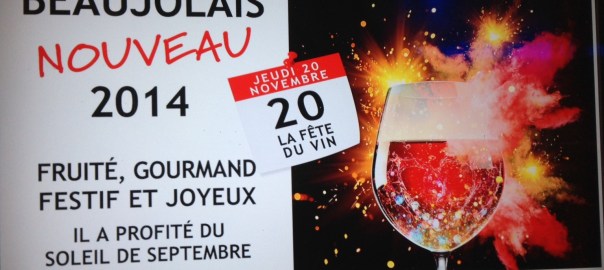
As if it were Halloween, I spent last night “trick or treating” in a sense. Instead of candy, however, I received sips of newly-released Beaujolais wines. My trail began on rue Cler, and from there I took the Metro into the 3rd arrondisement of La Marais, and back again to rue Cler in the 7th, where wine shops welcomed passersby to come in and taste the 2014 grapes harvested in France. Fortunately, 2014 has proved to be a great vintage, especially when you factor in the warm September in the vineyards.

In the most southern wine growing region in Burgundy, France, there’s an outlier region called Beaujolais, where the wine is quite different in regard to production and climate. In fact, Beaujolais is referred to as its own appellation that produces light, dry gamay grapes, which are a cross between a pinot noir and the ancient white gouais grape.

What most people know Beaujolais for is its one-third production of Beaujolais Nouveau, revealed recently in Paris, France, and in the U.S. by next week. About 35 million bottles of this Beaujolais Nouveau are shipped worldwide and within two months of harvest, thanks to carbonic maceration – the Nouveau style of production. The catch to buying a bottle is:

1) It should be consumed immediately — within a month, preferably

2) It will not have a high tannin structure or acidity, but will be fruity in both aroma and taste – tart cranberry overtones makes it a perfect pairing for Thanksgiving coffee-table talk.

Also, you should know that Beaujolais-Villages is not the same thing as Nouveau, but it is made from the remaining production to produce a darker, richer and more full-bodied wine – and can be stored longer than Nouveau.

Beaujolais Nouveau pairs well with Thanksgiving dinner – turkey and cranberry sauce, or even salmon, trout, pork chops or charcuterie. Just remember, it’s a new wine, so it’s pretty fruity and straightforward grape.

Get a few bottles while you can, and enjoy! Click here for an interesting take on Japan’s welcoming of the new harvest, and here to get a bit of Beaujolais Nouveau’s history in marketing and the person most responsible for putting Beajolais Nouveau Day on the calendar.

Wine Tasting at O’Chateau

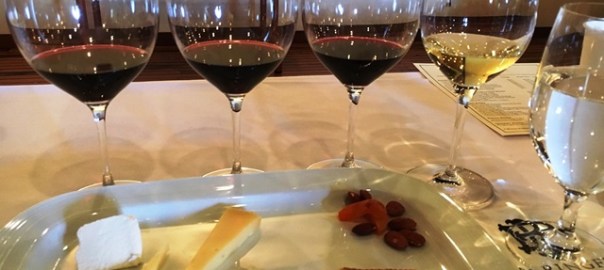
As the second part of a VIP Louvre Museum Night Tour and Wine Tasting offered by City Wonders, Paris has become even more interesting when a small group walked from an educational and highly interesting 2.5-hour tour within the Louvre to take a seat at the long wooden table within the historic stoned basement of O’Chateau. The history of O’Chateau is one filled with stories of its guests — dukes, ambassadors, princesses, countesses and all variety of important thinkers and writers of the time. Tonight, however, we are all VIP’s enjoying three wines and a plate of cheeses and hams while we learn about a few wines of France.

The first wine, an elegant Saumur 2012 cuvee vent du nord, was explained by the wine instructor, and the group listened intently about the regions within France from where each wine hailed. This chenin blanc grape was fruity and fresh, medium bodied and average. But, with the cheeses and jambon to which it was paired, worked perfectly.

O'Chateau wine tasting
O’Chateau wine tasting with City Wonders tour.

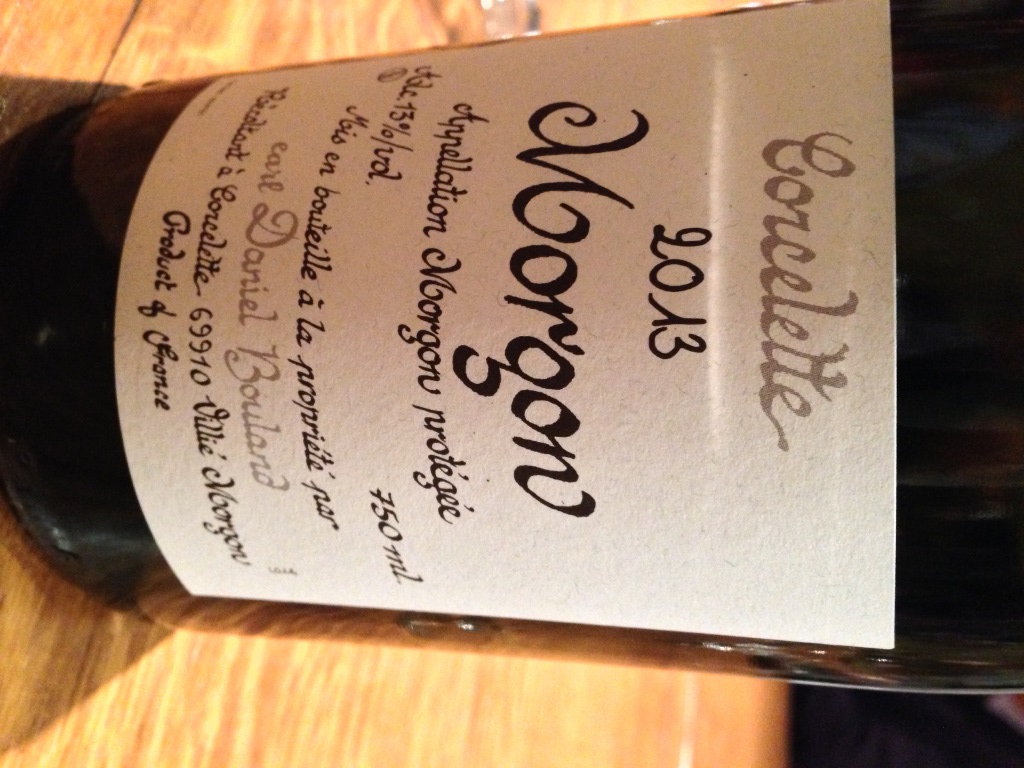
Next, a lesson in Beaujolais, France. This Corcelette Morgon 2013 is a wine made with a grape of the southern wine growing region in Burgundy and is referred to as its own appellation and not in the same category of Burgundian wines. It is light and dry, and we we are instructed to swirl and gaze at the ruby color of this gamay grape. We are enthralled in the process of tasting wine and devouring the cheeses and hams before us.

Finally, the malbec is poured. This is a 2012 Combel La Serre Cuvee Originelle Cahors from SW France. The instructor indicates its spiciness and bit of tobacco kick in the teeth. This is a wine that sells for around $10, and pairs best with beef and spicy food, mature and hard cheeses, as well as poultry. If you can find a 2010, this would be the better vintage.

So, the tasting was short and sweet, er… dry, actually if you refer to the wines, and after the closing of the tour, many in the group head upstairs to order a bottle of wine and food from the menu. At 10 p.m., the night has only just begun in Paris.

Visit http://www.citywonders.com/en/france/paris/paris-tours/louvre-tour-night-paris-wine-tasting to reserve your spot for a Skip the Line tour through City Wonders.