William Hill Estate Winery is a tried and true taste of vino I’ve been enjoying for many years. Ever since I met winemaker Ralf Holdenried for lunch one wintry afternoon in Boston, I’ve been a huge fan. His 2012 William Hill Estate North Coast Chardonnay ($17), made from grapes of Sonoma and Mendocino, is the essence of a true chardonnay, and his 2012 William Hill Estate North Coast Cabernet Sauvignon ($17) is in line with a true cab, meaning well balanced, full-bodied and flavors of deep dark berries. Of course, this wine has a bit of merlot, which only adds to the finish and complexity. Enjoy! 
Category Archives: Wine Reviews
The pinot gris of summer is liquid gold from MacMurray Estate Vineyards

My preferred white wine sip of the summer winner is… MacMurray Estate Vineyards 2013 Russian River Valley Pinot Gris ($20). When I opened this elegant beauty, my senses swirled in pleasure, beginning with the aromas of pear, baked apple and dried fig in a blend that would win the hearts of the world’s most sensitive sniffers. The color is of liquid gold, as refined as its fruit forward taste made with grapes from MacMurray Ranch Vineyard and Two Rock Vineyard, both in the Russian River Valley of California.
Buy as much as you can now because this vintage will not last forever. It’s that good. And it’ll only enhance with age.
Santa Cruz and the pinotage grape

The smell of redwood permeates the crisp cool and foggy morning air of Santa Cruz, where spring weather is almost year round, and summer falls during the months most areas in the U.S. experience autumn. The temperature fluctuation of cool mornings and warmer days is a recipe for good grape growing, so it’s no surprise the area is filled with vineyards.
In fact, outside of Napa Valley, Santa Cruz considers itself to be its own wine country. Just ask Attorney Paul Kemp, who built his winery a year ago along the Sea Wine Trail. Loma Prieta Winery is sited uphill on a steep slope on the Mount Loma Prieta. It is here where the largest vineyard of pinotage grapes grow, thanks to Kemp, a trial lawyer who took his big earnings from a winning case and decided to build a chateau next to his home, naming it Loma Prieta Winery. Loma Prieta is open to visitors on weekends to enjoy a picnic on the premises, if not enjoy a game of bocce ball on the newly built court, or play checkers or chess with life-size figures.
Because there are no large producers of the pinotage grape, Loma Prieta Winery has little competition. So, a bottle of this South African grape wine sells for $45 a bottle. You may be asking yourself, “Why pinotage?” Well, Kemp had pinot noir, cabernet sauvignon and merlot grapes in his vineyard, but he wanted to make an obscure wine. In 2008, he received two barrels of pinotage from a winery in Lodi, California, and this is when he fell in love with the grape. By 2010, he had grafted pinotage vines onto 500 of his existing cabernet sauvignon and merlot plants in his vineyard of approximately three acres. His next step would be to graft pinotage onto his existing pinot noir vines, making his vineyard the only one in the Santa Cruz Mountains an appellation to grow only pinotage grapes.
Kemp sources his pinotage grapes from his estate vineyard, as well as in Lodi at Amorosa Vineyard and Karma Vineyard, and Sierra Ridge Vineyard in Sutterville, California. His 2008 pinotage won several gold medals, including a double gold, and his 2009 won gold and platinum metals as well as a Best of Class at the 2011 Indy International Wine Competition. His 2010 Amorosa Pinotage won a platinum medal and 10 gold medals.
Says Kemp, “It was also selected in the Food and Beverage World’s Wine Competition as the third best wine in the other red wine category.”
His 2010 Karma Vineyard Pinotage has won two gold medals to date.
By now, if you’re wondering what this pinotage grape actually is, here’s your answer:
Pinotage is a grape that was developed in South Africa around 1925. A pinot noir was cross-pollinated with cinsaut (also known as hermitage), and obviously got its current name from its parents. Pinotage was not commercially produced until 1961. Due to the terrible problems with Apartheid, there was an international boycott against most South African wines until the 1990s.
Kemp’s fascination of pinotage grapes brought him to South Africa during the summer of 2011.
“I was treated like royalty by the South African Pinotage Society, primarily by Beyers Truter, the chairman of that organization,” says Kemp.
In 2012, Loma Prieta Winery received 25 tons of pinotage grapes from the three vineyards aside from his own estate, making him the largest purchaser of pinotage grapes in North America. That same year, 25 cases of 2011 Estate Pinotage, with its smooth, puckery tannins, was bottled — and sold out immediately.
Loma Prieta Winery stakes the claim to offering the one Pinotage Only Wine Club, and membership, says Kemp, is growing quite rapidly; therefore, selling out rapidly. Due to the increased sales, members of the Pinotage Only Wine Club are limited to two shipments a year.
On weekends, Kemp’s winery tasting room offers pinotage at the end of the tastings, while at the same time explains the history of the wine.
He says, “The vast majority of the people who come to our winery have neither heard of Pinotage, nor tasted it. The fun part for me is to get people to try it.”
With a sample of triple cream blue cheese from France, the 2012 Estate Pinotage is tasted straight from the barrel and proves to be earthy and full-bodied, with flavors of dark chocolate and aroma of tobacco. It would pair well with lamb or wild pork/game.
Due to its obscurity and the curiosity factor, it’s no surprise that Loma Prieta Winery’s pinotage wine, aged in Missouri oak barrels, has been their best seller, despite the fact that it also produces several other gold medal wines (merlot, petite sirah, cabernet sauvignon, and pinot noir).
In fact, their 2010 Petite Sirah won Best of Show at the 2013 Florida State Fair International Wine and Grape Juice Competition.

You can find Loma Prieta pinotage in Katsu, a Japanese restaurant in Los Gatos, Calif., and Bella Mia in San Jose. You’ll know the bottle by its label, created especially for Loma Prieta Winery by New Orleans artist Martin LaBorde, who incorporates his signature magician, Bodo, in much of his work. It’s a view of Mount Loma Prieta from the winery with a jagged red and orange line underneath, representative of the 1989 Loma Prieta earthquake.
Visit www.lomaprietawinery.com for more information.
A visual and palatable feast of elegance with Verde Sole wines
The label is inviting on its own, but once you open a bottle of Verde Sole Chardonnay, get ready for a taste of elegance. What’s atypical of this chardonnay is that its made in stainless steel – no oaking. What you’ll get is pure grape from Fiar Play in the Sierra Foothills, California’s gold country. This is a wine akin to Chablis, France. Pair it with appetizers of cheese and salami, or enjoy with grilled fish or chicken, fettuccine alfredo, and a caeser salad.
 So, once you’ve tasted the chardonnay, you’ll want to explore more varietals, such as Verde Sole’s zinfandel, a blend of mostly zinfandel, some petite sirah, syrah and grenache. An exquisite blend aged 18 months in French Oak barrels, this wine goes with anything red sauce or grilled. Enjoy! Visit www.VitoneFamilyWines.com for more information on where to purchase these Verde Sole wines.
Turning Leaf wines: Low priced, yet flavorful

Without being pretentious, Turning Leaf wines score for spring sipping and affordability. Although each of the four bottles I tasted were priced at $7.99, the guess was about $15 a bottle when put to the test.
Take, for instance, the Turning Leaf Merlot, with its earthy tones and hint of mocha — great to pair with a BBQ. Its texture is smooth and creamy, and this is a well-balanced wine with a complex, good tannin structure. There is no vintage on the bottle, so assume this wine, and in fact, all of the four I tasted, are a blend of fine years gone by.
Easy and inviting, Turning Leaf Chardonnay is perfect to pair with Brie cheese and apples, or grilled pork chops with ginger pear glaze. This wine offers a moderate finish, and its a bottle to use as an everyday pick that you don’t have to contemplate opening. Just do it and enjoy it.
Now, about the reds. Turning Leaf Pinot Noir is simple, and expressively boysenberry and pomegranate, with a hint of cooking spice. Open a bottle with a homemade pizza or roasted portabella mushrooms – perhaps sushi would work best. You decide.
Finally, the Turning Leaf Cabernet Sauvignon proves a wine doesn’t have to sit in oak for months to be good. The grapes speak for themselves in this jammy, meaty wine that works best with a good grilled rib-eye steak or prime rib — both with potatoes.
Perception is everything, and these wines with the simplistic labels and winemaking process prove that it’s all about the grapes. Visit www.TurningLeaf.com for more information.
Las Rocas: one Rose, one Garnacha
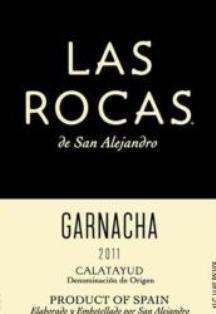
I’ve been a fan of Las Rocas wines for a long time, so when I received a few bottles, I could hardly wait to open them.
So I did.
The first one was a bottle of 2013 Las Rocas Rose ($14), which brought immediate thoughts of candy to mind. If you like candy and wine, you’ll love this rose. I wasn’t a huge fan and felt that with each sip I was drinking cotton candy. I love rose wines, but this one was a bit candy-rich for my palate.
Next, I opened a bottle of 2011 Garnacha ($14) and I have to say, this wine was quite enjoyable. Surrounded by my family, it was the only bottle of wine served with dinner and I enjoyed each and every sip. I read that the grape yields for this garnacha wine of Spain were less than expected, due to little rain and hot temperatures. Fortunately, the weather cooled right before harvest and the outcome is delightfully delicious! I would highly recommend a bottle of this Las Rocas Garnacha, made from grapes picked from 30-50 year old vines in Calatayud with mingled flavors of dark cherry and blackberry.
You can’t judge a wine list by a restaurant named Lucky Palace

Our van pulled up to the Bossier Inn & Suites on Diamond Jacks Boulevard in Bossier, Louisiana. As the driver parked in front of a nondescript block of a building surrounded by nothingness, an uneasy feeling washed over me. But, a trust in my itinerary at this travel writer conference eased my anxiety a bit. And then I walked inside.
Parallel to its exterior, my first reaction was to turn around and question whoever coordinated this visit. But this restaurant, Lucky Palace, was what people raved about — especially the wine list. So, how could I dismiss it based on its looks? The culinary offerings alone were intriguing: Asian-Cajun fusion, which translates to alligator in a stir-fry, as it turns out, among other Louisiana delicacies. But the wine list is what turned Lucky Palace around in my mind.
Although informed the owner was a Master Sommelier, he wasn’t. But, he had a sophisticated, expert palate and knew how to pair world wines. Kuan Lim’s story began with a trip from San Antonio with his wife. They stopped at the Bossier Inn & Suites along the way, but ended up staying for 16 years and counting.
It could not have been the surrounding beauty of the hotel, but perhaps he saw potential for making his mark in an area lacking a top-rate wine list. In fact, Lucky Palace has been awarded several Wine Spectator Awards of Excellence. Lim isn’t shy about stocking wines with a cost upward to $350 a bottle, a paradox even if his Chinese restaurant is considered gourmet.
We began with a seriously delicious glass of blanc de blanc (Pol Roger, Reserve, Brut, NV), paired with crawfish rolls that set the tone of sheer pleasure in an evening that ensued with laughter, travel stories and the company of all walks in the field of travel writing: bloggers, speakers, part-time wanderers, and print, online journalists. The social media enthusiasts among us clicked away, and we all cajoled each other and happily drank together. Our pairings continued with salted duck eggs that looked like a southern-style hush puppy, but were not, and we consumed whole shrimp, Chilean sea bass, and of course, that alligator with garlic sauce, paired with a 2011 Bourgogne Blanc, Dupont-Fahn, Chaumes des Perrieres, Burgundy.
Next, a perfectly balanced 2010 Domaine Faiveley, Mercurey, Burgundy, accompanied a plate of roasted duck on scallion pancakes, and Cantonese crispy T-Bone. I passed on the braised oxtail. Ending the tasting menu with a glass of Madeira, Broadbent, 5 Years Reserve was brilliant, especially when served with sensational sesame balls stuffed with peanut butter sauce. They went fast.
During the remainder of my stay in the Bossier/Shreveport, Louisiana area, like an inside secret, each time we drove past the billboard advertisement for Lucky Palace, I couldn’t help but grin like a Cheshire cat. Visit http://www.Lucky-Palace.com if you don’t believe me.
One dinner party, four bottles, courtesy of William Hill & Verde Sole
Two weeks before my dinner party, I opened up a bottle of 2010 William Hill Estate Napa Valley Merlot ($30) and enjoyed a glass with friends and appetizers before going out to dinner. I forgot how much I loved this plush, velvety wine, so the next time I found time, I opened up two more bottles of William Hill wines.
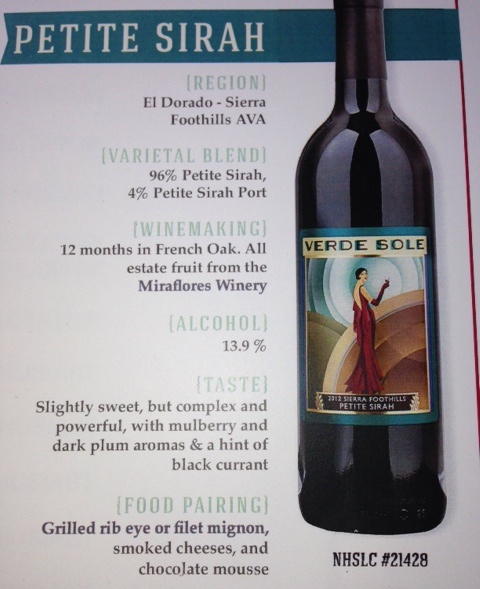
But first, I wanted to try a new wine brand to my palette: Verde Sole 2012 Pinot Grigio, which I also used in my recipe for chicken picatta, and a Verde Sole 2012 Petite Sirah, both made from grapes grown in the Sierra Foothills of California. Vitone Family Wines brings these wines to New England, thanks to Christian Vitone.
Vitone has an impressive resume, starting in the business at age 14 making wine with his grandfather, and as national distributor for Southern Wine and Spirits in 1998. Founded in 2010 after some time spent working alongside Francis Ford Coppola at his winery, as well as his Parisian style Cafe wine bar, Vitone’s passion was realized.
I can honestly say that the two wines opened were a pleasant surprise, beginning with the pinot grigio. This wine was served with brie cheese, proscuitto and mozarella, and after I raved about the taste, even the red-only wine drinkers among us had to try it out. And they loved it as well. I’m impressed. And before the guys finished the bottle of petite sirah, I enjoyed a glass of this wine made with grapes from Miraflores Winery. Yes, it was complex, and yes, it was smooth as silk. The addition of a bit of petite sirah port made a significant standout. I would purchase both wines again and again, and not only because the label is “Gatsby”-esque, which I love, but because these wines are as elegant as their labels. So, where can you purchase your own bottles (around $18)? Click here.
I’ll be trying out a few more Verde Sole varietals soon, so stay tuned for more. In the meantime, visit www.VitoneFamilyWines.com for more information.
The next bottle opened was a 2010 William Hill Estate Napa Valley Cabernet Sauvignon ($40) that once again proves winemaker Ralf Holdenried’s talent. Impressive and made with grapes from one of the best estates in Napa Valley, the added petit verdot, petite sirah and pinch of merlot really stunned everyone of us … even the white wine-only drinker who tasted a glass. If you’re looking for a wine that offers a full expression of cabernet character, this is the one to splurge on.
Last, but certainly not least, we opened a 2010 William Hill Estate Napa Valley Bench Blend Cabernet Sauvignon ($45). It didn’t matter that it was getting late, and it didn’t matter that we were full. This wine was aged predominantly in new French oak barrels, and it’s sophistication in plush taste and mouthfeel is realized whether it’s the beginning or end of the evening. And this limited edition wine was made with 100 percent cabernet sauvignon grapes from Napa Valley’s best blocks. We drank it to the very last drop.
MacMurray Ranch: My three pinots

Whenever I open a bottle of MacMurray Ranch pinot, I know I’m in for a treat. And this wine never disappoints. Let’s begin with the white:
MacMurray Ranch 2012 Russian River Valley Pinot Gris ($20) will only enhance with a bit of aging. It’s good right now, though, especially with pasta parmigiana with homegrown garden tomato sauce and sauteed zuchini flowers that will soon enough be plentiful at your local farmers market. Expect flavors of pear, baked apple, dried fig and white peach in this fruit forward wine with the rich mouthfeel.
Next, a few reds:
MacMurray Ranch 2011 Russian River Valley Pinot Noir ($28) is a mix of lavender and mushroom from the barrels, with an elegant fruit character that includes raspberry, cherry, red currant and boysenberries. The cool climate of the Russian River Valley is why this grape works at peak performance, and the 2011 vintage proved cooler than normal. What this means? The grapes matured even slower, adding more flavor as wine. I’ll open a bottle and enjoy on my deck now that the weather permits.
MacMurray Ranch 2011 Central Coast Pinot Noir ($23) is a bottle to get while there’s still some left. The 2009 Central Coast pinot noir sold out. This wine is down to earthy tones with a hint of sage. Open this bottle to aromas of raspberry and flavors of red currant and mild herbs from expert viticulture and barreling techniques. These grapes were destemmed, but not crushed, and prior to fermentation were cold soaked for a few days. Added to the winemaking technique were quality grapes from a wonderful 2011 vintage in the Santa Lucia Highlands.
‘From the best grapes come the best wines.’ – Louis M. Martini Winery
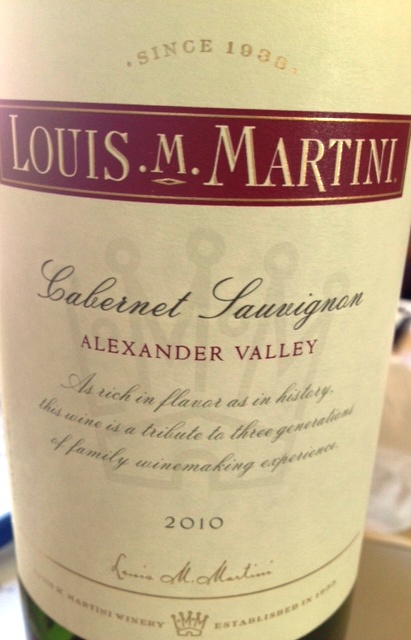
Last year, Louis M. Martini Winery celebrated 80 years in the wine-making industry, more specifically, in making distinctive cabernet sauvignon wines. Today, Martini wines are the first to be selected when included on wine menus in many restaurants, and I am no exception to ordering a bottle whenever I see it on the list. For every bottle I’ve ever had the pleasure to taste, Louis M. Martini wines have never disappointed me or my oenophile entourage. Especially the cabs.
Here are 3 cabs to try:
#1 – Louis M. Martini 2010 Napa Valley Cabernet Sauvignon ($34)
Crafted with grapes from the Eden of wine country’s Napa Valley, the smooth, velvet texture of this wine leads to earthy tones and an aroma of mocha delights. Enjoy this with beef roast or a plate of risotto with artichokes and mushrooms. I know I did. Kudos to the areas of Napa Valley where these grapes were harvested: Calistoga, Oak Knoll District, William Hill Estate Vineyard, Sage Canyon Vineyard and Ghost Pines Vineyard, and to third-generation winemaker Mike Martini for adding a bit of merlot, petite sirah, petite verdot and syrah grapes to enhance this wine’s complexity.
#2 – Louis M. Martini 2010 Alexander Valley Cabernet Sauvignon ($30)
This decadent dark purple Sonoma County cab offers a strong vanilla and undertone of leather, which is the essence of its time spent in the barrel. I enjoyed this with a plate of quinoa pasta and meatballs, but it would have been better with earthy dishes of wild game or red meats. Coming from a cooler than normal 2010 growing season, these grapes took their time to mature, which adds an intense flavor and tannin development. Enjoy,enjoy, enjoy.
#3 – Louis M. Martini 2011 Sonoma County Cabernet Sauvignon ($18)
I brought this bottle of wine to a dinner party, where it was enjoyed with a serving of beef brisket, carrots, garlic mashed potatoes and great company. Everyone loved this cab and considered it to be perfection. The touch of merlot and hint of petite sirah adds to this wine’s dark fruit characteristics and structure. Perfection in a bottle.
Visit www.louismartini.com for more information.
 Sip Tripper